

If you are trying to figure out the best Austin suburbs for commuting, do not assume they are all basically the same. They are not. One suburb can mean a manageable drive that gets you home in time to enjoy your evening. Another can mean spending an extra 30 to 40 minutes a day sitting in traffic, annoyed, tired, and wondering why you did this to yourself.
That difference adds up fast. We are not just talking about a few extra stoplights. We are talking about the difference between a 30-minute commute and a drive that can easily push past an hour during peak traffic. That is your life, your energy, your budget, and your sanity.
When people ask us about the best Austin suburbs for commuting, we always tell them the same thing: do not just look at the house. Look at the roads that connect that house to your actual daily routine.
For this ranking, we are comparing five core northeast Austin suburbs: Georgetown, Hutto, Round Rock, Pflugerville and Manor.
We are ranking them from worst to best based on commute performance, with a strong focus on getting into downtown Austin. We are also factoring in the real-world stuff people forget, like toll road strategy, neighborhood placement, two-lane farm roads, and infrastructure that has not caught up to growth yet.
Table of Contents
- The Commute Myth vs Reality
- Rank 5: Georgetown TX (The Worst Commute)
- Rank 4: Hutto TX (The Moderate Long Commute)
- Rank 3: Round Rock TX (The Moderate Commute)
- Rank 2: Pflugerville TX (The Better Commute)
- Rank 1: Manor TX (The Best Commute)
- The Reality of Commute in The Austin Suburbs
- The Financial Cost of These Commutes
- Road Projects Are Coming, But Do Not Buy Based on Hope
- Remote and Hybrid Work Changes Everything
- How to Make Your Decisions Before Moving to the Austin Suburbs
- Frequently Asked Questions
The Commute Myth vs Reality
Most people make the same mistake when comparing suburbs. They open up Google Maps, type in the office address, and check drive time at 2:00 p.m. on a random weekday.
That is not real life.
Real life is 7:30 a.m. on a Wednesday when everyone is trying to get to work at the exact same time. That is when the truth shows up.
The biggest thing to understand is this: Austin traffic is directional.
- The north-south corridors, especially I-35, are the problem.
- The east-west routes are generally much more forgiving.
I-35 is infamous for a reason. It is one of the most congested roadways in Texas, and if your daily routine depends on it, you need to be honest with yourself about what that means. Stop-and-go traffic. Frequent wrecks. Random backups that seem to appear out of nowhere. A commute that looks fine on paper and then doubles in real life.
That is why the best Austin suburbs for commuting are not always the ones people expect. The winners are usually the places that let you avoid relying on I-35 as much as possible.
The hidden factor almost everyone overlooks
There is another issue buyers underestimate all the time: how far the neighborhood itself is from the major roads.
A house may look close on a map, but if it takes 10 to 15 minutes just to get from your subdivision to the highway entrance, that time counts. In many newer communities, the roads feeding out of the neighborhood were originally built as rural farm-to-market roads. Then thousands of homes got added. The roads did not keep up.
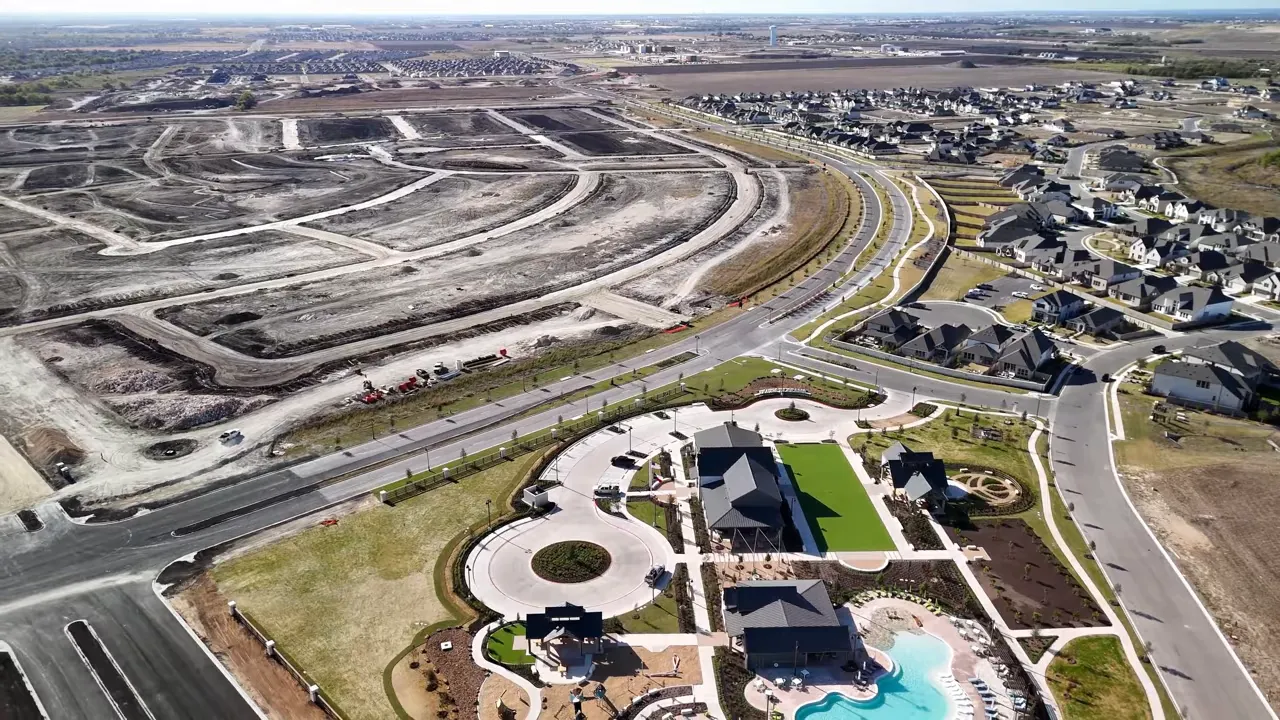
So now you have a modern master-planned community emptying onto a two-lane road with limited turn lanes and too few signals. That creates congestion before your commute has even officially started.
The cities usually do improve this over time. But road widening, traffic light installation, and corridor redesigns take years. If you buy on the edge of town, you are often trading immediate convenience for future upside.
Rank 5: Georgetown TX (The Worst Commute)
We love Georgetown. It has a beautiful historic square, strong community appeal, and a huge amount of new construction coming. There are roughly 30,000 new homes in the pipeline, which tells you how much growth is happening there.
But if you are judging purely on commute performance into downtown Austin, Georgetown lands at the bottom of this ranking.
Typical drive times from Georgetown to downtown Austin:
- Without traffic: about 40 to 55 minutes
- During peak hours: about 55 to 80+ minutes
That is a brutal daily reality if you are driving downtown five days a week. The main issue is simple: you are heavily dependent on I-35 South, and the bottlenecks between Round Rock and Pflugerville are relentless.
Georgetown can still make sense in the right situation. If you work in North Austin, near the Domain, Apple, or another northern employment hub, it is a different equation. A hybrid schedule can also make Georgetown much more realistic.
But if you know your job is downtown and your office expects you there regularly, Georgetown can absolutely test your patience.
Who Georgetown works best for
- People working in North Austin
- Hybrid workers who only commute a few days a week
- Buyers prioritizing community feel and new construction over commute speed
One more warning here: if you buy on the far north or west side of Georgetown, you are adding more local drive time before you even reach the interstate. That matters a lot more than people think.
Related Article: The REAL Pros and Cons of Living in Georgetown Texas
Rank 4: Hutto TX (The Moderate Long Commute)
Hutto is the affordability play on this list. If you are a first-time buyer, this city gets attention fast because you can still find brand-new homes under $300,000.
That affordability is real. But so is the commute trade-off.
Typical drive times from Hutto to downtown Austin:
- Without traffic: about 30 to 45 minutes
- During rush hour: about 45 minutes to over an hour
Hutto commuters typically rely on US-79 west to I-35 south, which means they still run into the I-35 merge problem. And right now, Highway 79 itself is a major pain point.
The corridor between Taylor and Hutto has become much more congested, likely because of increased industrial activity and regional growth, including the Samsung factory influence in the area. The result is a mix of stoplights, heavy traffic volume, and frequent slowdowns that make the road feel frustrating and, at times, downright dangerous.

That problem does not magically disappear once 79 heads west into Round Rock either. It stays busy through much of the day, not just at rush hour.
Why toll roads matter so much in Hutto
If you live in Hutto, State Highway 130 may become your best friend. Yes, the tolls add up, but it lets you bypass a lot of the I-35 misery. It is one of those situations where people resist paying until they realize how much stress it saves.
We have seen that happen over and over. On paper, the toll road looks like an unnecessary monthly expense. In reality, many people decide it is worth every dollar.
Hutto tends to work best for:
- Buyers who want more house for the money
- People with hybrid or remote flexibility
- Workers heading to North Austin more often than downtown
Also, local positioning matters. Many residents say living south of Highway 79 is a strategic advantage because it helps you get to the toll roads with less hassle.
Hutto is a classic trade-off suburb. You can get more home, but you may spend less time enjoying it.
Related Article: The REAL Pros and Cons of Living in Georgetown Texas
Rank 3: Round Rock TX (The Moderate Commute)
Round Rock sits right in the middle of the pack, and honestly, that makes sense. It is a strong all-around option with a more established feel than some of the farther-out suburbs, plus a healthy job base of its own.

Typical drive times from Round Rock to downtown Austin:
- Without traffic: about 25 to 40 minutes
- During peak hours: about 45 minutes to over an hour
That is clearly better than Georgetown and Hutto, and the reason is one word: options.
Yes, I-35 South is still the main route, but Round Rock residents also benefit from State Highway 45, which can be a major quality-of-life upgrade. It gives people another way around the city and can shave 10 to 15 minutes of frustration off the drive when traffic cooperates.
You can still hit backups at the I-35 and SH-45 interchange, so this is not some magical traffic-free setup. But having an alternative route is a big deal, especially when one accident can wreck your original plan.
Round Rock’s real strength
Round Rock is not just about commuting into Austin. It also has enough employers and economic activity that some people can work much closer to home, which changes the conversation completely.
The key with Round Rock is being close to 45 or 130. The closer you are to those toll roads, the more you benefit from what Round Rock has to offer. If you buy way out on the far east side and it takes 15 minutes to get out of your area before you even hit a major route, you lose a lot of that advantage.
For many buyers, Round Rock is the practical middle-ground choice. Not the cheapest. Not the absolute fastest. But balanced.
Related Article: Round Rock TX: The Best and The Worst of This Growing Austin Suburb
Rank 2: Pflugerville TX (The Better Commute)
Pflugerville takes the runner-up spot because it offers a better blend of route flexibility and proximity than a lot of people realize.
Typical drive times from Pflugerville to downtown Austin:
- Without traffic: about 20 to 40 minutes
- During rush hour: about 35 minutes to an hour
What makes Pflugerville one of the best Austin suburbs for commuting is that you are not trapped into one route. Depending on where you live, you may be able to use:
- Palmer Lane west to I-35 south
- FM 685 to 183
- State Highway 130 on the east side
That route flexibility matters. If I-35 is a mess, you can pivot. That is a big advantage in the Austin area.
The evening drive back into Pflugerville also tends to see lighter congestion than the suburbs farther north, which is one reason so many buyers are drawn here.
The catch with Pflugerville
As with every fast-growing suburb, location inside the city matters just as much as the city itself.
The farther east you go, especially into newer communities, the more likely you are to run into infrastructure lag. Neighborhoods like The Grove at Blackhawk and Enclave at Cele are attractive new developments, but they are further from the main corridors and still dealing with road systems that were never designed for this level of growth.

That means two-lane roads, stop signs, temporary traffic lights, and local choke points that can eat up 10 to 15 minutes before you even reach a road that really moves.
Pflugerville absolutely earns its high rank, but you have to be strategic. Buy closer to the highways and your commute can stay manageable. Buy farther east, and you need to bring some patience with you.
Related Article: Explore The BEST Of Pflugerville Texas: Guide To Austin Texas Favorite Suburb
Rank 1: Manor TX (The Best Commute)
This is the one that surprises people.
If we are ranking the best Austin suburbs for commuting among these five core options, Manor takes the top spot.
Typical drive times from Manor to downtown Austin:
- Without traffic: about 20 to 30 minutes
- During peak hours: about 25 to 45 minutes
That is significantly better than the other suburbs on this list, and the reason comes back to a point we keep emphasizing: east-west routes beat north-south dependence.
Manor benefits from Highway 290 West, a partial toll route that gives you a fast and relatively predictable drive into the city. Yes, there is still a small stretch of I-35 involved at the end depending on where you are headed, but the bulk of the commute avoids the full I-35 nightmare.
That predictability is huge. A commute is not just about raw minutes. It is also about whether you can count on the drive being reasonably consistent from day to day.
Why Manor is positioned well for the future
Manor also sits in a strong position for growth. East Austin continues to expand, and new job centers are emerging in that direction. So you are not just getting one of the best Austin suburbs for commuting today. You are also buying into an area that is connected to Austin’s future growth path.
Of course, no suburb is perfect. Manor is still developing its retail and restaurant base, so you may find yourself driving into Pflugerville or Austin for certain amenities. But if commute time is your top concern, Manor stands out clearly.
Related Article: T he Real Pros and Cons of Living in Manor, Texas
The Reality of Commute in The Austin Suburbs
Here is what this really means in daily life.
If you choose Georgetown over Manor, you could be adding roughly 30 to 40 minutes to your daily commute. That can mean up to an hour and a half extra every day. Over a week, that can become 7.5 extra hours. Over a month, 20 to 30 hours.
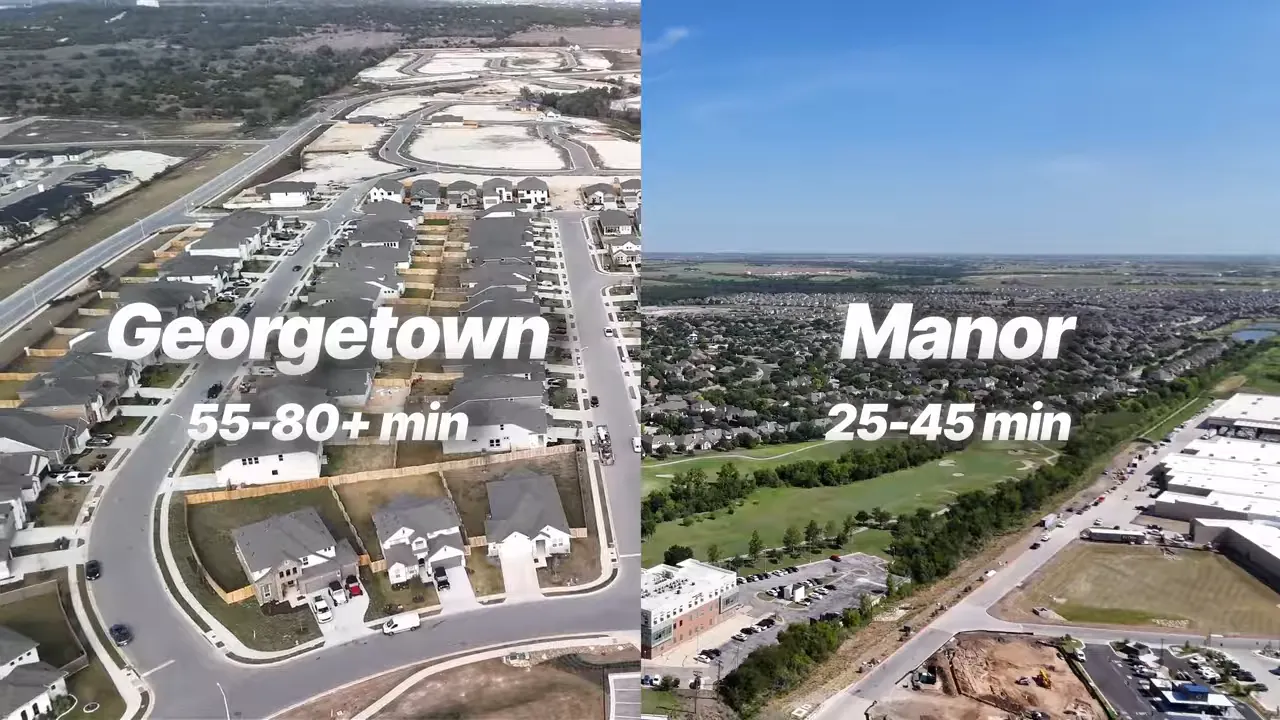
That is not a small difference. That is time with your family, time with your dogs, time on your patio, time not spent staring at brake lights.
And the cost is not just time. It is stress. Traffic changes your whole day. If you show up to work already irritated and come home already exhausted, that affects everything else too.
All five of these suburbs have solid things going for them:
- New construction options
- Pet-friendly communities
- Yards, trails, and dog parks
- Strong neighborhood identity
But the road network attached to your house can shape your quality of life more than the house itself.
We really cannot say this enough: the location you choose is more important than the house you buy.
The Financial Cost of These Commutes
When people compare suburbs, they often focus only on the purchase price. That is a mistake.
The best Austin suburbs for commuting can also save you money in ways that are easy to overlook.
If you are commuting from Hutto or Georgetown and relying on toll roads like 130 or 45 every day to stay sane, those tolls add up quickly. We have seen monthly toll expenses land in the $150 to $250 range, and sometimes more.
That means:
- $2,000 to $3,000 per year in toll costs
- More gas
- More vehicle wear and tear
- More maintenance over time
So if a house in Manor is a little more expensive upfront than a house in Hutto, you cannot just compare sticker price. You have to compare total cost of living. In many cases, a shorter and cheaper commute changes the math.
This is why the cheapest house on paper is not always the cheapest home in reality.
Road Projects Are Coming, But Do Not Buy Based on Hope
There is a lot of road investment happening around Austin. The Texas Department of Transportation has billions planned for regional improvements, including projects that should help places like Hutto and Pflugerville.
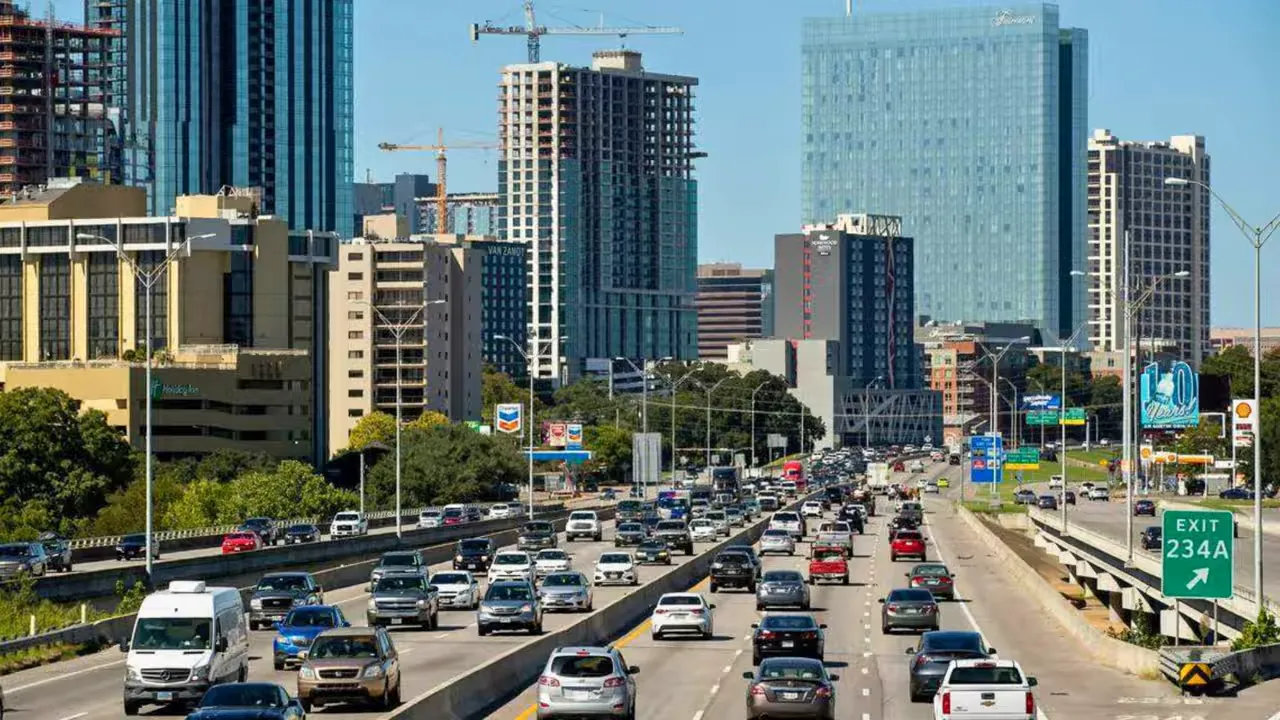
Some of the big ones include:
- Intersection improvements along Highway 79 in Hutto
- Road widening on Kelly Lane and Weiss Lane in Pflugerville
- The major I-35 Capital Express project
Those projects matter. They will help eventually.
But here is the reality check: road projects take years. Sometimes a lot of years.
You cannot buy a house based on a promise that a project might be finished by 2030 and assume that solves your quality-of-life problem now. If the current commute would make you miserable, do not count on future construction saving you in time.
Remote and Hybrid Work Changes Everything
This is where the conversation gets more personal.
If you only go into the office two days a week, a longer commute from Georgetown may feel much more doable. You can turn it into podcast time, audiobook time, coffee time, and not feel like it is draining your soul every single day.
If you are fully remote, your commute is zero. In that case, the best Austin suburbs for commuting may not matter nearly as much as these factors:
- Community amenities
- Home office space
- Yard size for pets
- General lifestyle fit
That is why some buyers love Georgetown or the far east side of Pflugerville. What might feel isolated for one person can feel peaceful for another.
There is no one-size-fits-all answer here. Your office location, your work schedule, and your tolerance for traffic all change what “best” means.
How to Make Your Decisions Before Moving to the Austin Suburbs
If possible, drive the route yourself during rush hour before making a decision.
Not on a Sunday afternoon. Not at lunch. Not by checking an app once and calling it good.
Drive it at 7:30 a.m. on a weekday. Start from the specific neighborhood you are considering. Go all the way to your office. Then ask yourself one honest question: Can I live with this?
If you are moving from out of state and cannot test it in person, do the next best thing:
- Check local community forums
- Read neighborhood groups and message boards
- Search traffic complaints for the roads you would use
- Look beyond the city name and study the exact neighborhood location
If traffic is bad, people are going to talk about it.
And remember, rankings are a starting point, not gospel. The suburb that works best for someone commuting to the Domain is not necessarily the one that works best for someone driving downtown every day.
Your commute will define your daily experience more than most people realize. Take the time to get it right now, and your future self will be very grateful.
Ready to find the Austin suburb that fits your daily commute (not just the map)? Call or text our team today for a quick strategy consult and we’ll help you narrow down the best neighborhoods based on your office location and schedule. Call/Text: 512-648-2828
FAQs About Top Austin Suburbs for Commuting
Which are the best Austin suburbs for commuting into downtown Austin?
Among Georgetown, Hutto, Round Rock, Pflugerville, and Manor, Manor ranks as the strongest option for commuting into downtown Austin because it benefits from the east-west Highway 290 corridor and avoids most of the worst I-35 congestion. Pflugerville comes in second because it offers multiple route options.
Why is Manor ranked above Round Rock and Pflugerville?
Manor has a faster and more predictable drive pattern for many downtown commuters. The biggest advantage is that the commute relies more on east-west travel, which is generally lighter than the north-south I-35 corridors. That predictability gives Manor an edge.
Is Georgetown a bad place to live if I work in Austin?
Not necessarily. Georgetown can be a great fit for people working in North Austin or those with a hybrid schedule. But for someone commuting downtown five days a week, the long dependence on I-35 makes it one of the toughest options in this group.
Are toll roads worth it in the Austin suburbs?
For many people, yes. Toll roads like 130 and 45 can save major time and stress, especially in Hutto and Round Rock. The downside is cost. Some commuters spend $150 to $250 a month or more, so tolls should be part of your real housing budget calculations.
Does remote work change which suburb is best?
Absolutely. If you work remotely full time, commute time may matter much less than yard size, amenities, office space, and neighborhood feel. In that case, a place like Georgetown or a farther-out part of Pflugerville may become much more attractive.
What is the biggest mistake buyers make when comparing commute times?
The biggest mistake is checking drive times during off-peak hours and assuming that is accurate. Another major mistake is ignoring how long it takes to get from the neighborhood itself to the main highway. Local roads can add a surprising amount of time.
How should I compare the best Austin suburbs for commuting for my situation?
Start with the city rankings, but then narrow it down by your exact office location, schedule, and neighborhood options. If possible, test the route during rush hour. If not, research local traffic discussions and focus on the specific roads you would use every day.