

Most people think the best-performing Austin suburb must be the one that exploded the most during the pandemic.
That assumption is exactly where people get into trouble.
When we pulled a full decade of new construction sold data across the northeast Austin suburbs, the real story looked very different from the headlines. The flashy pandemic winners were not the long-term winners. In fact, some of the suburbs that looked hottest in 2021 through 2023 ended up being the weakest decade-long investments.
We focused on five suburbs that come up constantly in relocation and new construction conversations: Georgetown, Round Rock, Pflugerville, Hutto, and Manor. We used actual sold-home data from the Austin Board of Realtors and compared today’s prices not just to peak prices, but to a more honest baseline: a normal long-term appreciation path of about 4% annually.
That matters because pandemic pricing warped everything. If all you do is compare one peak to another, you miss what really happened.
And once you line these suburbs up side by side, the takeaway is crystal clear: suburb selection matters more than most buyers realize.
Table of Contents
- Why We Used a 4 Baseline Instead of Pandemic Peaks
- The Bottom Tier: Pflugerville and Round Rock
- The Middle Ground: Hutto
- The Top Performers: Manor and Georgetown
- What This Means If You Bought at the Peak
- The $54,000 Decision: How Equity Really Gets Built
- What Buyers Should Pay Attention to Right Now
- FAQ: Austin Suburbs Home Value
Why We Used a 4 Baseline Instead of Pandemic Peaks
Raw price growth can be misleading.
Yes, it tells you what happened. No, it does not tell you whether a suburb truly outperformed over time.
Between 2021 and 2023, the housing market was anything but normal. Ultra-low interest rates, remote work, relocation demand, and inventory shortages pushed prices into territory that often had very little to do with long-term fundamentals. So if we want to understand which Austin suburbs actually created the most durable value, we need a benchmark that strips out the frenzy.
That benchmark is simple: historically, US real estate tends to appreciate around 4% per year compounded over the long run.
We used that 4% annual growth rate as a normal-market trend line. In other words, we asked this question: Where would prices likely be today if the pandemic distortion had never happened?
That gives us a much more useful answer than just asking which suburb spiked the hardest.
Once we compared current prices to that trend line, the market split into three very clear groups:
- Suburbs that overshot and then fell below normal
- Suburbs that corrected back to roughly fair value
- Suburbs that stayed well above trend because demand kept supporting the price growth
That is where the real decade winners showed up.
The Bottom Tier: Pflugerville and Round Rock
These are the cautionary tales.
Not because they are bad places to live. They are not. Both are popular, established, convenient suburbs with solid communities and plenty of appeal.
But if we are looking strictly at new construction appreciation over the last decade, they landed at the bottom of the list.
Pflugerville: the pandemic mirage
In 2016, the median new construction price in Pflugerville was $325,000. That was perfectly reasonable for the market at the time.
Then the pandemic hit, and prices went nearly vertical. By April 2023, the median price had climbed to just over $600,000, an 85% jump in only three years.
That kind of movement felt unstoppable in the moment. Buyers were grabbing whatever they could. Cheap financing and shifting work patterns made suburban new construction incredibly attractive.
Then the correction showed up.
Today, Pflugerville’s median new construction price is about $407,000, roughly 32% down from peak. More importantly, it is sitting about $74,000 below where a normal 4% growth trend would have put it.
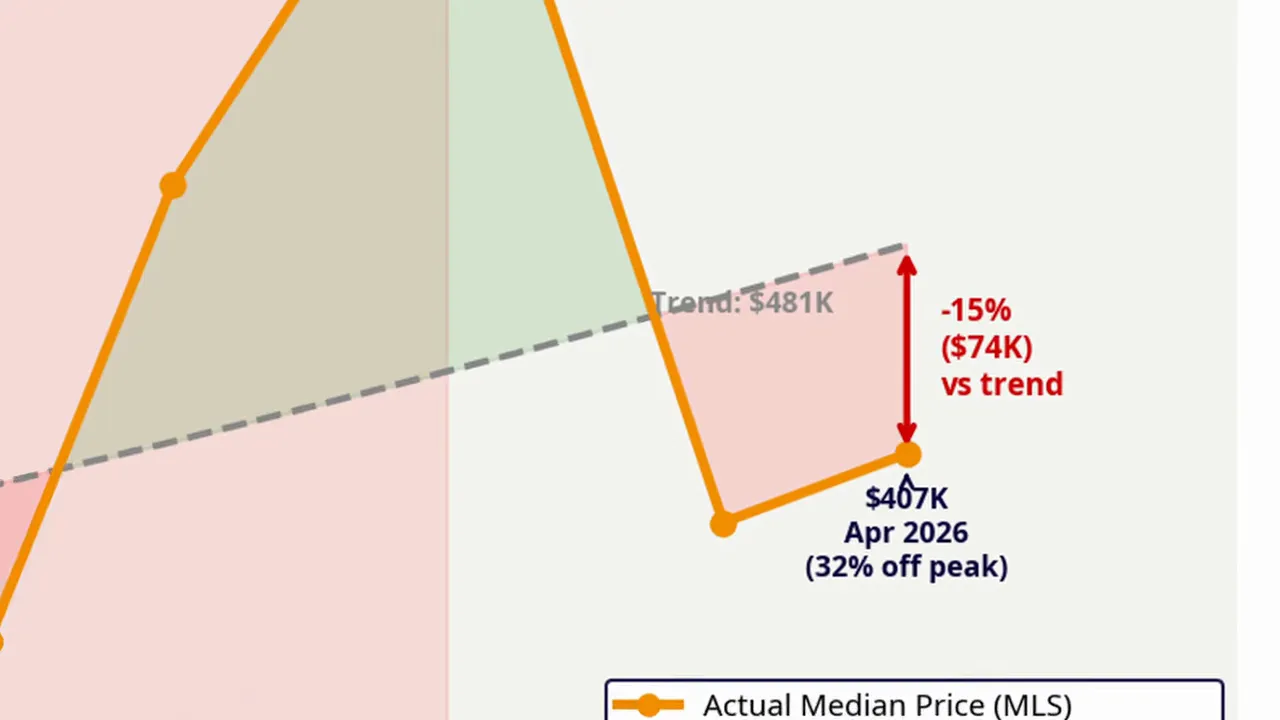
That is the key. Pflugerville did not simply rise too fast and return to normal. It corrected past normal.
That tells us the market overshot on the way up and overshot on the way back down.
So if someone bought new construction there near the top and needs to sell today, that is a much tougher financial conversation than most people expected a few years ago.
Round Rock: a very similar story
Round Rock followed a nearly identical pattern.
In 2016, the median new construction price was $318,000. By April 2022, that had surged to $594,000. Then came the drop. Today it sits around $410,000.
That puts Round Rock about $61,000 below its normal trend line.
It is also the slowest market in this group right now, with homes sitting around 161 days on market.
That is a major change from the peak years, when homes could go under contract in a matter of days or even hours.
The list-to-close ratio in Round Rock is around 98.5%, which means buyers are not only getting leverage on incentives like rate buydowns and closing costs, but in some cases on the actual purchase price too.
For buyers entering Round Rock now, that can be an opportunity. For owners trying to sell after buying at the top, it can be painful.
The broader lesson is simple: pandemic spikes did not equal durable value.
Over 10 years, Round Rock appreciated about 29% and Pflugerville about 25%. Those are still gains, but they are nowhere close to what many people would have predicted back in 2016.
The Middle Ground: Hutto
Hutto sits right in the middle of this whole story, and honestly, there is something refreshing about that.
It has long been the more accessible entry-level option for buyers who wanted new construction without paying Georgetown or Round Rock pricing.
In 2016, the median new construction price in Hutto was $251,000. During the pandemic period, Hutto also overshot, peaking around $514,000 in April 2024. Then it corrected to roughly $356,000.
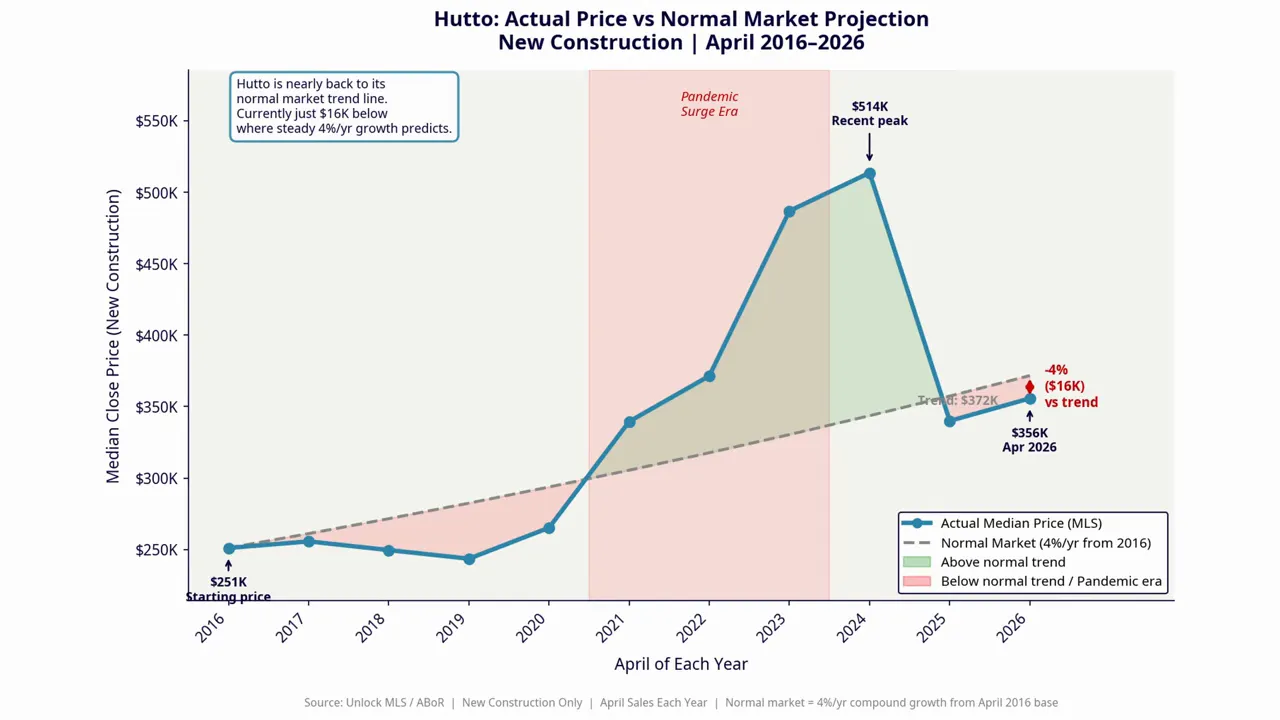
But unlike Round Rock and Pflugerville, Hutto did not crash down through the trend line. It settled back to almost exactly where normal long-term growth would suggest it should be.
At the time of this analysis, Hutto was only about 4.3% below the normal projection, or roughly $16,000. In a market around the mid-$300,000s, that is basically noise. That is the kind of gap one round of builder incentives can cover.
So when we say Hutto is fairly valued, that is what we mean. Buyers are not paying a big pandemic premium. They are paying something close to what the long-term market would reasonably support.
That makes Hutto especially interesting for buyers who want:
- A lower entry price
- New construction inventory
- A stable market rather than a still-correcting one
- Long-term upside without as much distortion
Homes in Hutto are moving in about 66 days, and the list-to-close ratio is roughly 100.6%, meaning buyers are still paying slightly over asking on average.
That tells us Hutto is not sleepy. It is healthy, competitive, and fairly balanced. It just is not dramatic.
And sometimes boring is exactly what you want in a housing market.
Over the 10-year stretch, Hutto delivered nearly 42% appreciation. That may not make for flashy headlines, but it is a solid long-term return in a suburb that appears to have found its footing.
The Top Performers: Manor and Georgetown
This is where the data gets really interesting.
The two suburbs that won the decade were not the two most obvious picks. One was the most affordable option at the start. The other was already the premium market.
And somehow, they ended up essentially tied at the top.
Manor: from budget buy to breakout performer
In 2016, Manor was the cheapest suburb in this group. Median new construction price: $196,000.
A brand-new home under $200,000 sounds almost unreal now, but that was Manor not very long ago.
Today, the median price is around $430,000, which is a gain of just over 119% across the decade.
Even more impressive, Manor is sitting about $139,000 above the normal market trend line.
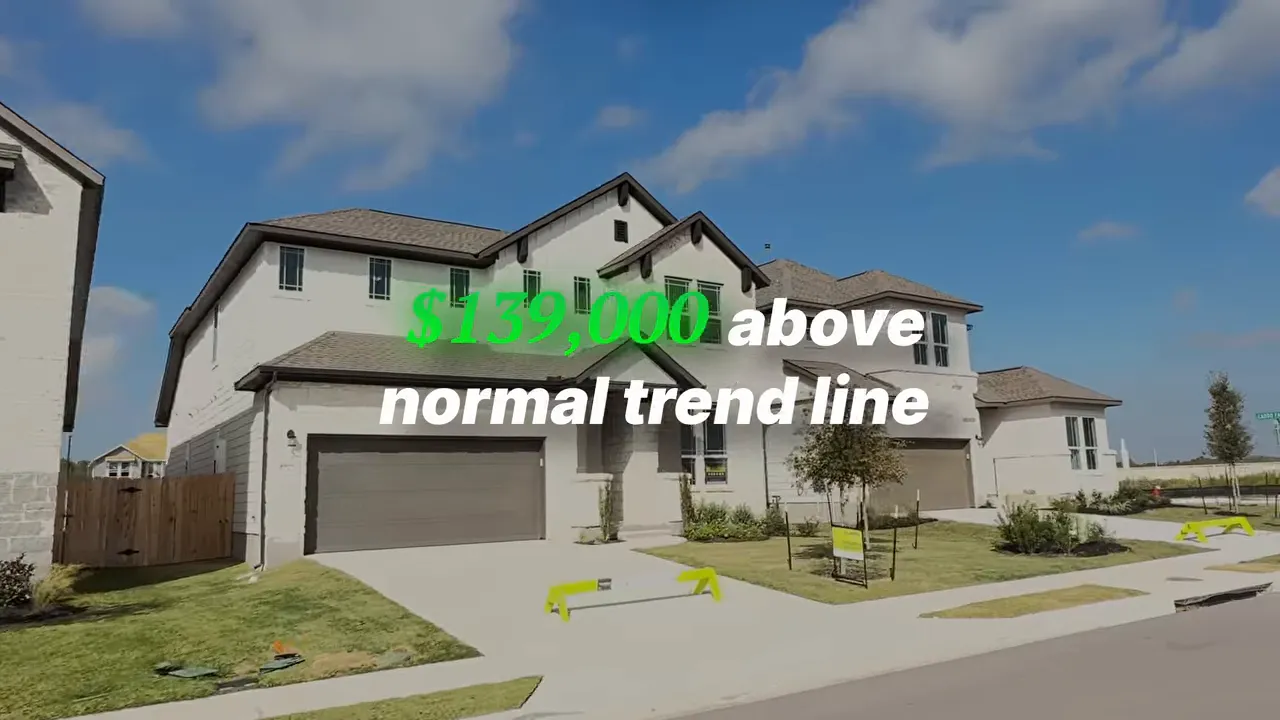
That means Manor did not just rise because everything rose. It meaningfully outperformed.
The growth appears to be driven by a combination of relative affordability and real buyer demand. Manor offered new construction at a price point that places like Georgetown and Round Rock often could not match, and buyers responded.
Right now, it is also the fastest-selling suburb in the group, with homes moving in about 28 days.
Price per square foot supports the story too. Manor went from about $128 per square foot in 2016 to $168 per square foot today, a 32% increase. That tells us people are not only paying more because homes are larger. They are paying a real premium for the location itself.
Georgetown: the premium market that never stopped climbing
Georgetown is the real plot twist.
It was already the most expensive suburb in this comparison back in 2016, with a median new construction price of $270,000. A lot of people would have assumed that meant the upside was more limited.
Instead, Georgetown just kept going.
Today, the median price is about $592,000, which is also roughly 119% appreciation over the decade. But because it started from a higher base, the dollar gain is dramatically bigger: about $322,000 in value growth.
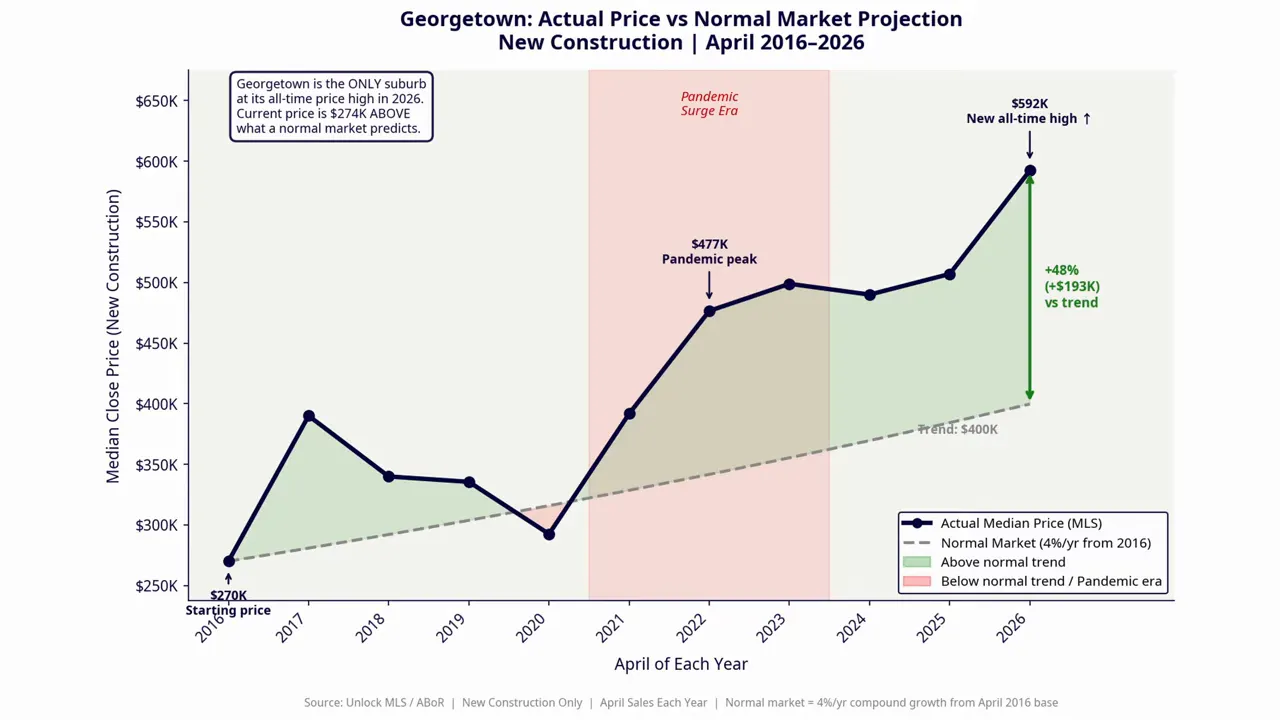
And Georgetown has one distinction no other suburb in this group can claim: it is currently sitting at its all-time high.
Every other suburb peaked during the pandemic and later corrected. Georgetown did not. It kept climbing.
It is now roughly $193,000 above where a normal 4% annual appreciation line would place it.
That is not a one-time distortion. That is sustained demand.
Why? Because Georgetown has a lot of the ingredients buyers consistently pay for:
- Established infrastructure
- Master-planned communities
- Retail and restaurants
- Strong amenity packages
- A high quality-of-life reputation
The premium is not random. It is earned.
Its price per square foot jumped from about $126 in 2016 to $211 today, a 68% increase. That is one of the clearest signs in the data that buyers place a true premium on Georgetown, not just on bigger homes or inflation-adjusted pricing.
Even more interesting, Georgetown’s list-to-close ratio is around 98.7%, which means there is still a little room for negotiation despite the market being at an all-time high.
That is not a huge discount environment, but it is enough to matter.
What This Means If You Bought at the Peak
This is the emotional part of the conversation, because a lot of homeowners bought near the top and are still trying to make sense of where they stand.
We get it. We bought at the peak too.
Here is the honest answer: it depends heavily on which suburb you bought in.
A median new construction buyer in Round Rock in April 2022 paid about $594,000. That same home is worth roughly $410,000 today, a paper loss of about $185,000.
A peak buyer in Pflugerville in 2023 paid about $602,000. That home is now worth around $407,000, a paper loss of about $195,000.
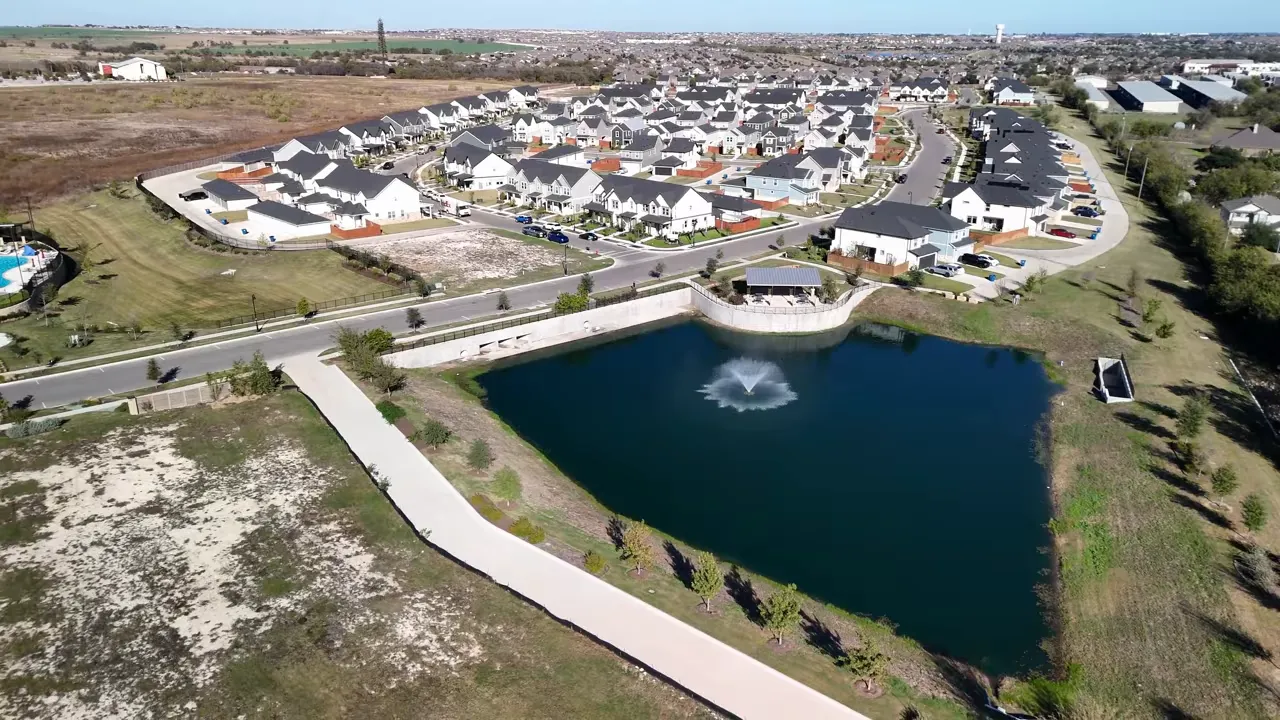
The important words there are paper loss.
A paper loss becomes real only if you sell. If you are staying put, you still own the home, you still benefit from future appreciation, and you are still paying down principal over time.
Based on the 4% long-term appreciation framework, a Round Rock buyer from the 2022 peak could potentially recover back to purchase price in around 5 to 7 years, assuming the market behaves in a historically normal way going forward.
That is not a guarantee, but it is a reasonable data-based expectation.
And this is where Georgetown stands out again: a buyer who purchased at Georgetown’s peak has no paper loss because Georgetown’s peak is happening now, not years ago.
That is a huge distinction.
The deeper lesson is not “never buy at the peak.” The deeper lesson is this: suburb selection can matter more than market timing.
The $54,000 Decision: How Equity Really Gets Built
One of the best ways to understand this whole conversation is to look at actual down payment leverage and equity growth.
Take Georgetown in 2016.
If a buyer put 20% down on the median new construction home at $270,000, that down payment would have been $54,000.
Today, that same home is worth nearly $593,000. After 10 years of mortgage payments, estimated equity would be around $422,000.
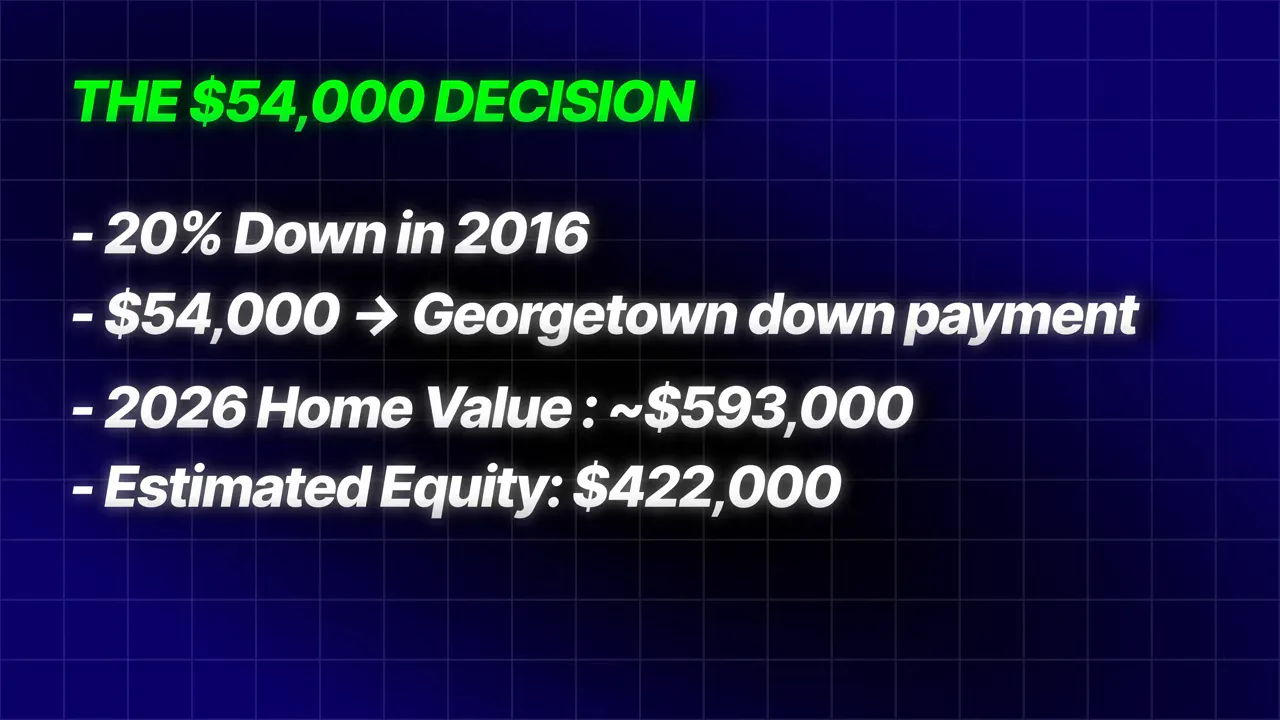
That is roughly a 597% return on the original $54,000 down payment.
That is the power of leveraged real estate.
You controlled 100% of the asset with 20% of the money, and when the value rose, you captured 100% of the appreciation while also paying down debt over time.
And plenty of buyers put down less than 20%, which makes the leverage effect even more dramatic.
Now compare that with Round Rock in 2016.
A buyer there put 20% down on a $318,000 home, or about $63,600. Today that home is worth around $410,000, with a 10-year gain of roughly $92,000.
That is still positive. We are not calling Round Rock a bad decision.
But compared to Georgetown, the difference in resulting equity is massive. The Georgetown buyer ended up with about $230,000 more equity despite putting less money down at the start.
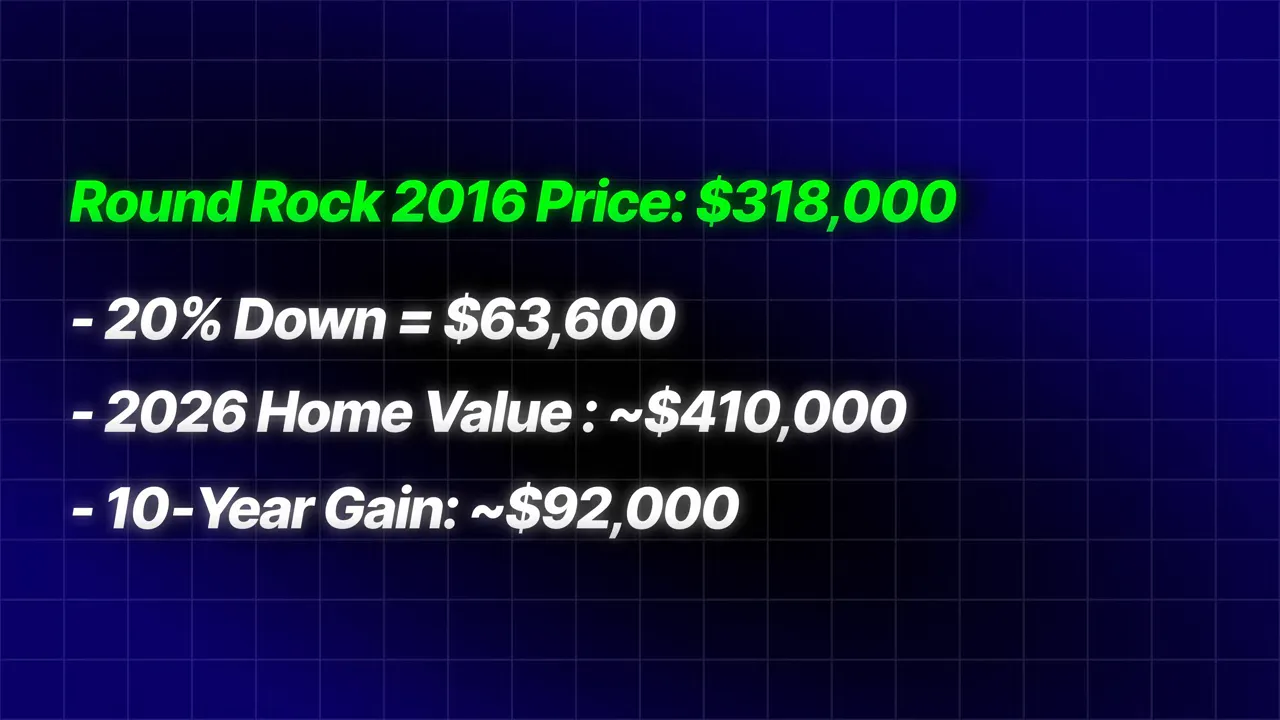
That is why choosing the right suburb is not some minor detail. It can change your financial future in a very real way.
What Buyers Should Pay Attention to Right Now
If you are shopping for new construction in the Austin suburbs over the next 6 to 12 months, this data gives you a much better roadmap than generic national market commentary.
Here is the current snapshot:
- Pflugerville: lowest list-to-close ratio at about 95.9%, which means meaningful price negotiation is happening
- Manor: also highly negotiable at roughly 95.7%, even while moving fast at 28 days on market
- Hutto: slight seller strength at 100.6%, with buyers paying just over asking on average
- Georgetown: around 98.7%, so there is still some negotiating room despite all-time-high pricing
- Round Rock: about 98.5% and the slowest market at 161 days, making it the strongest buyer’s market of the group
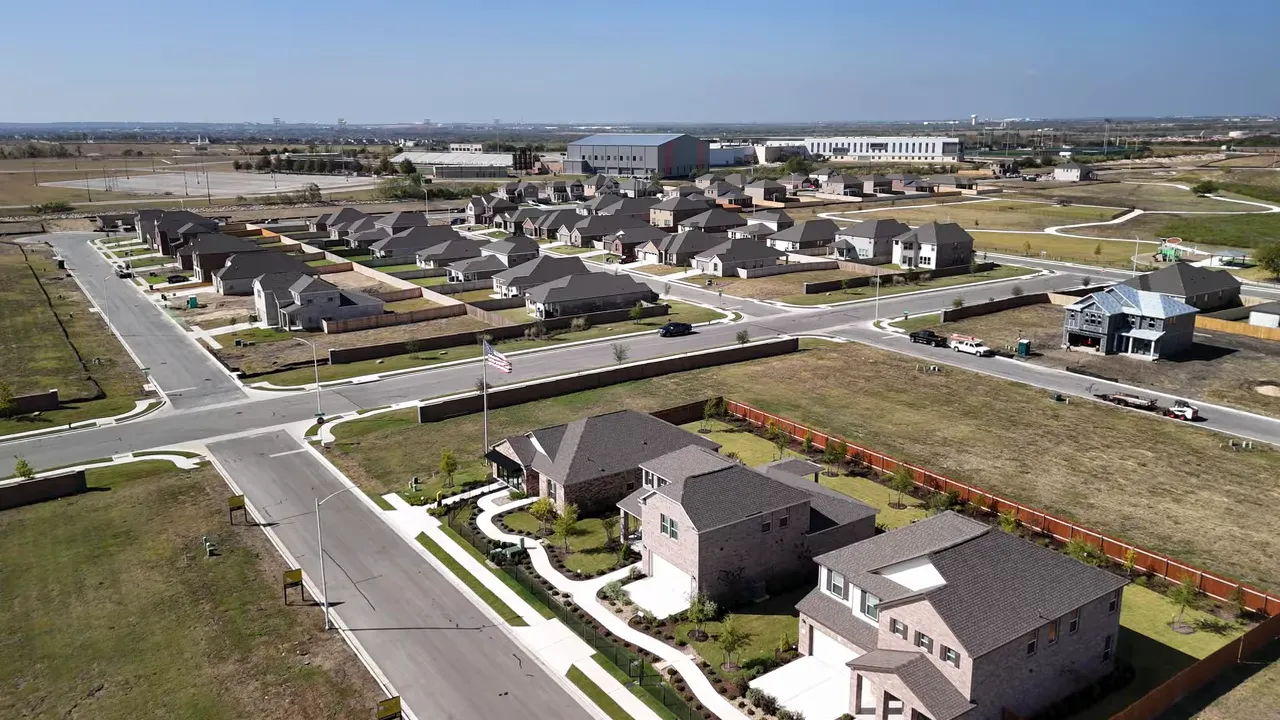
That mix creates very different opportunities depending on your priorities.
If you want price leverage, Round Rock and Pflugerville deserve a look.
If you want momentum plus relative affordability, Manor is hard to ignore.
If you want fair value and stability, Hutto stands out.
If you want proven long-term demand and premium performance, Georgetown remains the benchmark.
And if there is one theme running through all of this, it is that the market rewards patience, but it rewards the right location even more.
Interest rates will move. The economy will cycle. Headlines will get dramatic. But over the last decade, well-located, well-built new construction in the right northeast Austin suburb has still created serious wealth.
Georgetown and Manor proved that in very different ways.
The next 10 years will tell a new story. The question is whether the suburb you choose puts you in position to benefit from it.
Want help choosing the right northeast Austin suburb (and the right neighborhood) based on what the data actually says—not hype? Call or text 512-648-2828 to talk with our team!
FAQ: Austin Suburbs Home Value
Which Austin suburb had the highest home value appreciation over the last 10 years?
Georgetown and Manor were essentially tied at the top, each posting about 119% appreciation in median new construction home prices over the decade. Georgetown delivered the larger dollar gain because it started from a higher base.
Which Austin suburbs underperformed after the pandemic boom?
Pflugerville and Round Rock were the weakest performers in this five-suburb comparison. Both surged during the pandemic, then corrected below their long-term 4% trend lines, indicating that they overshot and then overcorrected.
Is Hutto a good place to buy new construction right now?
Hutto appears to be one of the most fairly valued markets in the group. It is only slightly below its long-term trend line, has a relatively accessible entry price, and shows a healthy, stable level of buyer demand.
What if I bought a home in Round Rock or Pflugerville at the peak?
If you bought at the peak and need to sell today, you may be facing a significant paper loss. But if you can hold the property, that loss remains unrealized, and long-term historical growth suggests values may recover over time. In the case of Round Rock, the data suggests a potential recovery window of around 5 to 7 years under normal market conditions.
Why does Georgetown keep outperforming other Austin suburbs?
Georgetown appears to benefit from sustained demand tied to infrastructure, amenities, master-planned communities, retail, restaurants, and overall lifestyle appeal. It is the only suburb in this analysis still sitting at its all-time high instead of below a prior pandemic peak.
Does suburb selection matter more than timing the market?
Based on this decade of data, yes. Buyers who purchased in stronger-performing suburbs built dramatically more equity than buyers who made similar purchases in weaker-performing suburbs during the same general market period. The location decision had a major impact on the long-term result.
Which Austin suburb gives buyers the most negotiating power right now?
Round Rock stands out as the strongest buyer’s market in this group because homes are taking the longest to sell, around 161 days, and the list-to-close ratio is below asking. Pflugerville and Manor also show notable room for price negotiation based on their lower list-to-close ratios.
When people ask which Austin suburb is the best investment, the real answer is usually not the one getting the loudest attention.
The data from the last 10 years says the winners were Manor and Georgetown. The stable middle ground was Hutto. And the suburbs many people would have confidently picked a decade ago, Round Rock and Pflugerville, ended up trailing the field.
That is why broad market talk is never enough. Real estate is local, and even within one region, outcomes can vary wildly.
Choose carefully. Be patient. And if your goal is building real long-term equity, pay very close attention to the neighborhood, not just the interest rate.
Read More: Best Dog-Friendly Austin Suburbs You NEED to Know