
Data Centers Near Austin Suburbs: What Buyers Need to Know About Hutto, Round Rock, and Manor
Stand in the backyard of a new home in Hutto on a quiet night and you might hear it: a low hum that never cycles off. It sounds like an air conditioner running around the clock, except it's not yours. It's a data center less than two miles away, cooling hundreds of servers that keep your streaming shows running. Say the words data center at a city council meeting here and the room fills up. People bring signs. One neighbor said she did not want data centers listed under amenities when she sells her home.
Fair enough. But the national numbers say home values near data centers have been climbing, not falling. In counties with 10 or more data centers, values grew 95% in 10 years. In counties with none, only 64%. So the fear is overblown? Some of it, not all of it. One fear holds up, and it's not the one you'd guess.
We measured the distance from eight new construction communities we cover to the nearest data center site. The closest is under a mile away. The farthest is 14 miles. That's not trivia, that's the decision. And if you work from home with the air conditioning running all day and a dog who expects 72 degrees, you'll feel a power bill change before your commuting neighbors do. A countywide average doesn't tell you what's behind your back fence. So we dug through city records, state filings, and a 55-page National Association of Realtors report to put the four biggest fears on trial: water, the power bill, noise, and home values.
Today we're showing you which communities sit closest to a data center, what the research actually says, and the two questions we ask before any client signs on a lot. Because the sales rep in the model home works for the builder, not for you. Bring your own representation from the start. If you're planning to visit a model home, reach out to us first. We dig through city records and state filings because we like you and we want you to know what's really planned before you sign anything.
Table of Contents
- Why Data Centers Are Landing in Our Suburbs
- What Is a Data Center and Why Does It Need So Much Power?
- Water Usage: Closed-Loop vs Evaporative Cooling
- Your Electric Bill: Who Pays for the Grid?
- Noise: The Most Underrated Concern
- Home Values and Buyer Stigma
- Double Creek Crossing
- University Heights
- Rolling Glen
- Heritage Mill
- Prairie Winds
- The Grove at Blackhawk
- New Haven
- Whisper Valley
- What to Check Before You Buy
- Conclusion
Why Data Centers Are Landing in Our Suburbs
A data center is a concrete box full of computers that really want to stay cold. Think of it as a very expensive refrigerator. Every show you stream runs through a building like this. Keeping it cool is where the water, the power, and the noise come from. NAR counts 127 of them in Texas, second only to Virginia. But this summer, Texas passed Virginia for data center construction. Now we have about twice as much being built.
Here's why they're coming to us. Austin's city-owned utility has essentially shut the door on new data centers, and several city council members want to ban the biggest ones outright. So developers moved north and east right into our suburbs. The Skybox campus in Hutto sits next to a major transmission line and it's planned for 600 megawatts. For scale, the Colovore project nearby is 40 megawatts. That's enough for about 8,000 Texas homes on a summer afternoon. The Skybox campus is 15 times that.
Texas data centers use about 25 billion gallons of water a year. By 2030, it could hit 161 billion, and the state water plan doesn't count them yet. The governor said companies want to plug about 474 gigawatts into the state grid. About 90% of those requests are data centers. Most won't get built, but somebody has to decide who pays for the new lines for the ones that do. That decision is happening right now.
What Is a Data Center and Why Does It Need So Much Power?
Every show you stream, every email you send, every photo you back up runs through a building like this. A data center is essentially a warehouse full of servers running around the clock. Those servers generate heat. A lot of it. Keeping them cool is the entire challenge, and that's where the water, the power, and the noise come from.
The industry started moving to closed-loop cooling years ago, but not every facility uses it. Some still rely on evaporative cooling, which is basically a giant swamp cooler. Water evaporates, takes the heat with it, and it's gone. A big data center using evaporative cooling can go through up to 5 million gallons a day. That's a town of 10,000 to 50,000 people. That's basically like the town of Manor.
But here's the part that changes the story for our area. Round Rock's standard for new data centers is closed-loop cooling. A closed loop means the water goes around and around in sealed pipes, like the coolant for your truck. For the new Skybox site, the city estimated the first fill at about 10,000 gallons. That's a really big swimming pool. 10,000 gallons once, then topped off every few years. The city said that an evaporative system that size could use hundreds of thousands of gallons a day. Round Rock measured the Sabey Data Center at about as much water in a year as 15 homes.
Water Usage: Closed-Loop vs Evaporative Cooling

The claim you hear at every meeting is that a data center drinks a small town's worth of water every day. For some of them, that's true. A big data center using evaporative cooling can go through up to 5 million gallons a day. That's water that's meant for us. The industry started moving to closed-loop years ago, so the scary numbers are mostly about the old way of doing it.
Here's the catch. Last year, only about 30% of Texas data centers even answered the state's water survey. In September, the governor ordered the Water Board to start penalizing the ones that don't. You want to come to Texas and use our resources? You better answer those questions. So the water fear, fair or overblown? For us it depends on the cooling. For the industry as a whole, fair, because most of them won't say what they use.
Round Rock requires closed-loop cooling for new data centers within city limits. That's a big difference. The new Skybox site will use about 10,000 gallons once, then top off every few years. That's actually less than a lot of backyard pools. But outside city limits, those protections usually don't exist. Texas counties generally can't zone, so the rules that apply in Round Rock don't necessarily apply two miles down the road.
Your Electric Bill: Who Pays for the Grid?
In the NAR survey, energy costs were the number one worry clients raised with agents. 61%. So it sounds to me like agents need to have some type of education on data centers, especially if they're being built near areas where these agents work and actively sell homes. And the data looks bad at first. From 2020 to 2024, home electric rates rose 21% in counties with 10 or more data centers, 16% in counties with none. Case closed.
Not even close. Counties with just one or two data centers rose the most, almost 23%. And by 2024, the counties with the most data centers actually had slightly lower rates than counties with none. More data centers doesn't automatically mean a bigger bill. Texas rates went up 24% in that stretch, data centers or not.
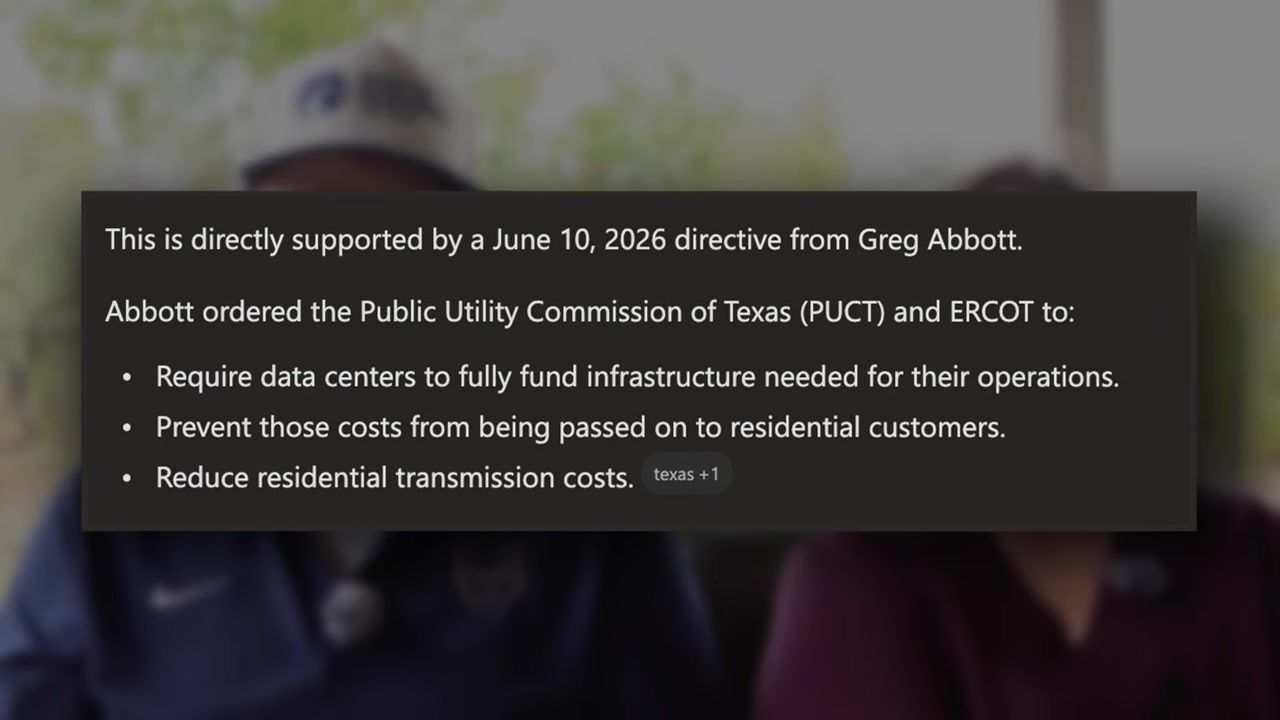
But here's what actually worries us. The demand. This summer, the governor said companies want to plug about 474 gigawatts into the state grid. About 90% of those requests are data centers. Most won't get built, but somebody has to decide who pays for the new lines for the ones that do. A state law passed last year says the biggest users pay their own costs to connect. In June, the governor told regulators to keep data center costs off household bills. The final rule on how grid costs get split is expected in December.
I personally think data centers, if they want to use electricity, need to help Texas build the infrastructure for electricity. That's a pretty good trade-off. They should pay for their own usage. It shouldn't be spread across households, especially with all the tax benefits they get already. That's just us being agents and homeowners. But the state does keep tightening. This summer, the governor paused new data centers from connecting to the grid. On September 21st, he told the state environmental agency to stop issuing their permits too until an audit of their water and power use is done. His words: Texans must come first. Data centers must pay their own way. It's one thing to say it. However, Texas, are you actually going to enforce it?
And if you heard about the 2021 freeze, which was devastating to Houston and Austin, this one matters. The grid operator says when a grid gets tight, data centers have to cut power before homes face rotating outages. Fair or overblown? Absolutely fair. 100% fair. Fair and unfinished. The rules that decide your future bill are being written this winter.
Noise: The Most Underrated Concern
This is the one we said would surprise you. Noise. Nobody puts it on a brochure, but in the NAR survey, it's the complaint agents mention most in their written comments. Think about what keeps those servers cold. Big cooling units running around the clock. And backup diesel generators. When those generators run, they can hit 105 decibels. That's a jet flying overhead. But generators mostly run for testing.
Day to day, data centers typically put out 50 to 85 decibels. Think vacuum cleaner. The part that bugs people the most is the low hum. It doesn't stop. It's like living next to an air conditioner that never cycles off. Some people tune it out, some people never do. I bet the people that never do, it drives them absolutely crazy.
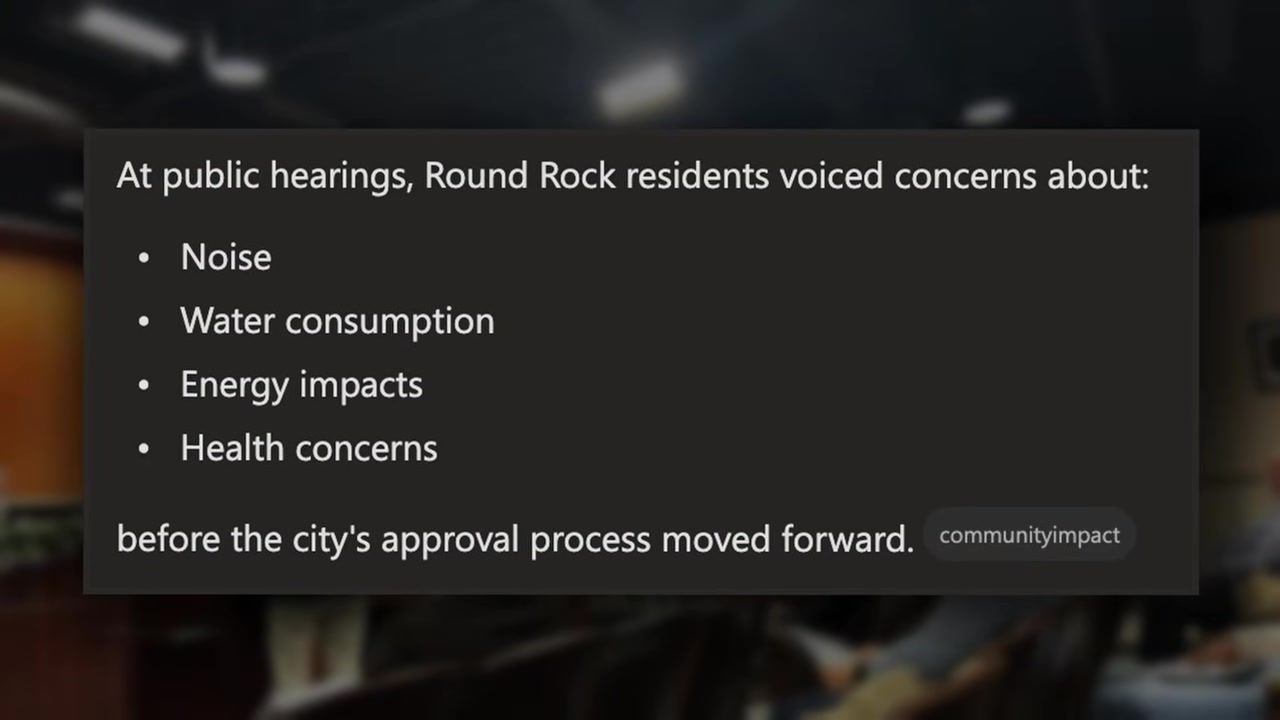
This year, at least six class-action lawsuits were filed against data centers. Five are about noise. One Wisconsin couple built a gazebo for quiet evenings. Now they hear a hum. That's the whole issue. You bought the quiet and then the quiet left. And it's not hypothetical here. When Round Rock voted on the new Skybox site, council members noted that neighbors of the existing Sabey campus had complained about the noise.
So the city wrote conditions into the new one: generators only for emergencies and testing, an 80-foot setback, a masonry wall, two rows of evergreen trees along the neighborhood. Here's the catch: it only works within city limits. Texas counties generally can't zone, so outside the city, those protections usually don't exist. Fair or overblown? Absolutely fair. Of the four fears, this one is the most real and least talked about, and it's the one that depends most on distance.
Home Values and Buyer Stigma
Does living near a data center hurt your home value? Let's start with the county numbers. Typical home values in counties with no data center run around $174,500. In counties with 10 or more, $431,750. So there's an argument that data centers actually make homes worth more. NAR is clear on that. Those counties already had higher incomes and more college grads. Data centers went where the money was.
Fine, but what about closer in, like down the street? George Mason University looked at 2023 home sales in Northern Virginia, the biggest data center market in the country. Homes closer to data centers actually sold for more, not for less. I did not expect that. Neither did the researchers. Part of it may be the new roads that came with it. And it's one study in one market.
So what are agents seeing? A split. 25% say nearby home values went up. 22% say they went down. In the South, where we are, 28% saw a decrease. And the public mood has flipped. In August polling, 75% of Americans opposed a data center near where they live. A year earlier, it was only 42%.
But the stigma isn't always earned. The neighborhood association president next to the Switch campus by Dell called them absolutely the best neighbors you could have ever asked for. They even sponsor neighborhood events. So here's how I read it. Maybe prices aren't dropping, but if some buyers won't even look at a house near one, that's fewer buyers when you sell. That's exactly what the survey shows. 26% of agents said buyer demand near data centers went down. Only 19% said it went up.
The stigma is real even where the price data isn't. So, fair or overblown? On price, mostly overblown. On how many buyers will want your house later, fair. Stigma is a resale cost even if it never shows up in an appraisal. Tell us in the comments, would you rather live in a ghost house or a house next to a data center.
Double Creek Crossing
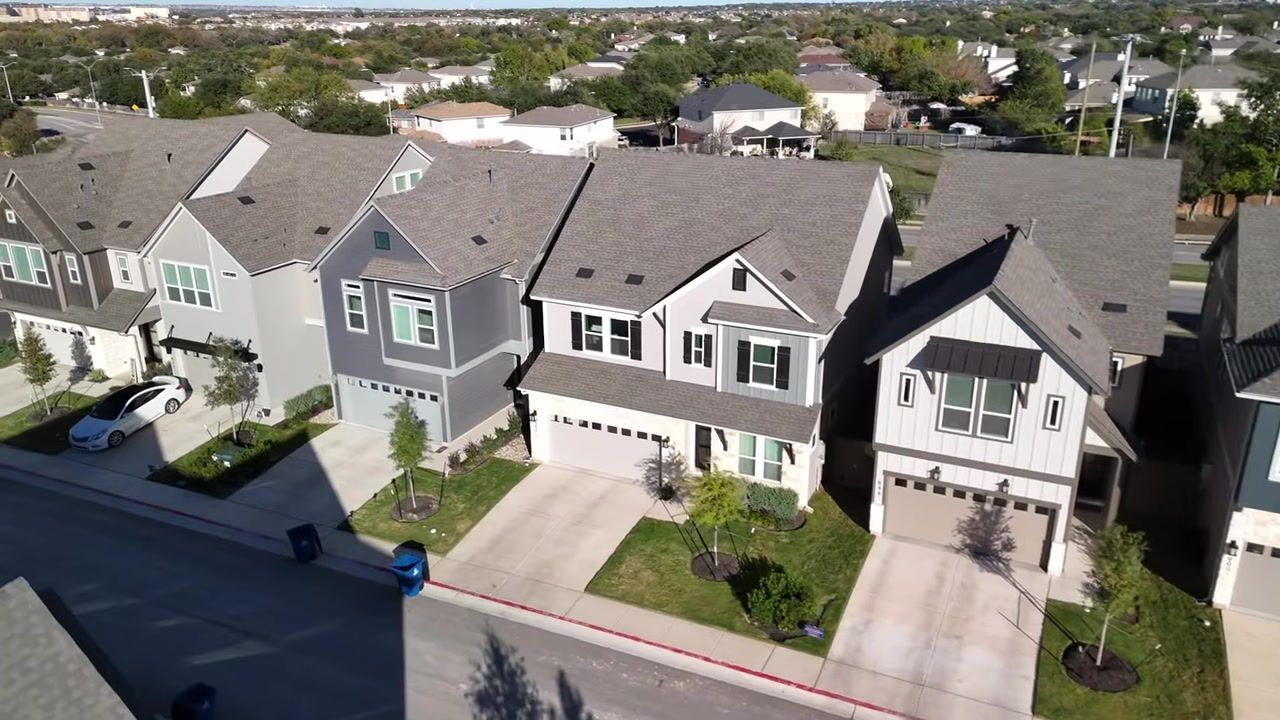
Double Creek Crossing in Round Rock is under a mile away from the Sabey Data Center, with two more data center sites within two miles. It's the closest community we cover to a data center. That's not a dealbreaker for everyone, but it's something you need to know before you sign.
Round Rock requires closed-loop cooling for new data centers within city limits. That means low water use. The city measured the Sabey Data Center at about as much water in a year as 15 homes. Round Rock also has noise protections: an 80-foot setback, a masonry wall, two rows of evergreen trees, and generators only for emergencies and testing. Those protections only apply within city limits, but Double Creek Crossing is inside the city, so those rules cover the sites nearby.
When Round Rock voted on the new Skybox site, council members noted that neighbors of the existing Sabey campus had complained about the noise. So the city wrote conditions into the new one. Day to day, data centers typically put out 50 to 85 decibels. Think vacuum cleaner. The part that bugs people the most is the low hum. It doesn't stop. It's like living next to an air conditioner that never cycles off. Some people tune it out, some people never do.
All of the communities that we cover, at least during the day that we visited, we've never heard any data center noise, even for ones that are just a mile away. To be fair though, we heard construction noise, so it could have been drowned out. I'd stand in the backyard at night. If there's already a data center nearby, that's when you'll hear it.
And to be fair, there's an upside. Round Rock's planning director says the new Skybox site takes up the space of about 100 homes and pays property taxes like 500. The permanent jobs though are few. So if you're looking at Double Creek Crossing, know the distance, know the protections, and know that the city has already approved two more sites within two miles.
University Heights
University Heights in Round Rock is about 3.5 miles from the new Skybox site on Old Settlers. Round Rock already approved another data center near Chisholm Parkway and I-35 that hasn't started. Approved but not built is the category most buyers miss.
The Skybox campus in Hutto sits next to a major transmission line and it's planned for 600 megawatts. For scale, the Colovore project nearby is 40 megawatts. That's enough for about 8,000 Texas homes on a summer afternoon. The Skybox campus is 15 times that. So this is not a small facility. It's one of the biggest planned in Central Texas.
Round Rock requires closed-loop cooling for new data centers within city limits. That means low water use. The city estimated the first fill at about 10,000 gallons, then topped off every few years. The city also wrote noise conditions into the new Skybox site: generators only for emergencies and testing, an 80-foot setback, a masonry wall, two rows of evergreen trees along the neighborhood. Those protections only apply within city limits, but University Heights is inside the city, so those rules cover the Skybox site nearby.
At 3.5 miles, you're far enough that noise is unlikely to be an issue. But if you're looking at University Heights, know that Round Rock has already approved another data center near Chisholm Parkway and I-35 that hasn't started. That one is not yet built, so we don't have a distance yet. But it's on the map. And that's the kind of thing we check before a client signs on a lot.
Rolling Glen
Rolling Glen in Hutto is about 1.8 miles from the Skybox campus. The Skybox campus is planned for 600 megawatts. That's 15 times the size of the Colovore project nearby. So this is one of the biggest data center campuses planned in Central Texas, and Rolling Glen is less than two miles away.
Last spring, a developer wanted a data center on 40 acres zoned for apartments next to homes and the farmers market in Hutto. The neighbors pushed back hard. With Texas law, if owners of 20% of the land within 200 feet object in writing, the council needs a three-fourths vote. City staff recommended denial, and the developer withdrew before the vote. That's the power of the people. Power of the city. But counties are different.
Here's a twist. The land under that new Round Rock Skybox site is owned by an entity connected to that same Hutto developer. Same company. One city pushed back, the other said yes with conditions. It's really city by city. Hutto neighbors successfully blocked a data center proposal near the farmers market last spring. That shows that city residents have leverage when sites are within city limits.
But Rolling Glen is 1.8 miles from a 600-megawatt campus that's already approved. That's close enough that noise could be an issue. Day to day, data centers typically put out 50 to 85 decibels. Think vacuum cleaner. The part that bugs people the most is the low hum. It doesn't stop. It's like living next to an air conditioner that never cycles off. Some people tune it out, some people never do. I'd stand in the backyard at night. If there's already a data center nearby, that's when you'll hear it.
Heritage Mill
Heritage Mill in Hutto is about 1.8 miles from the Skybox campus, the same distance as Rolling Glen. The Skybox campus is planned for 600 megawatts. That's enough for about 120,000 Texas homes on a summer afternoon. So this is not a small facility. It's one of the biggest planned in Central Texas, and Heritage Mill is less than two miles away.
Last spring, Hutto neighbors successfully blocked a data center proposal near the farmers market. City staff recommended denial, and the developer withdrew before the vote. That shows that city residents have leverage when sites are within city limits. But the Skybox campus is already approved. It's going up. And Heritage Mill is 1.8 miles away.
That's close enough that noise could be an issue. Day to day, data centers typically put out 50 to 85 decibels. Think vacuum cleaner. The part that bugs people the most is the low hum. It doesn't stop. It's like living next to an air conditioner that never cycles off. Some people tune it out, some people never do. This year, at least six class-action lawsuits were filed against data centers. Five are about noise. One Wisconsin couple built a gazebo for quiet evenings. Now they hear a hum. That's the whole issue. You bought the quiet and then the quiet left.
If you're looking at Heritage Mill, know the distance, know that the Skybox campus is already approved, and stand in the backyard at night. If there's already a data center nearby, that's when you'll hear it. All of the communities that we cover, at least during the day that we visited, we've never heard any data center noise, even for ones that are just a mile away. To be fair though, we heard construction noise, so it could have been drowned out.
Prairie Winds
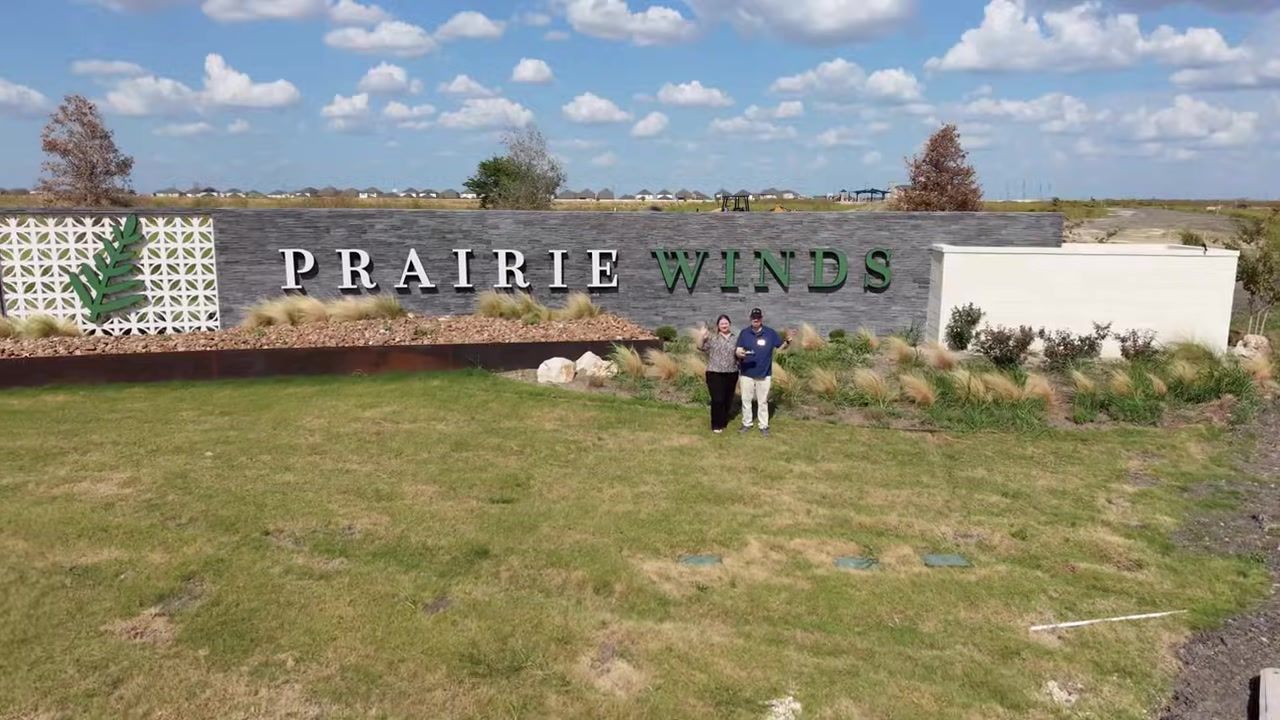
Prairie Winds in Hutto is about 3.5 miles from the Colovore data center, which is 40 megawatts. That's enough for about 8,000 Texas homes on a summer afternoon. Prairie Winds is also about 2.7 miles from the withdrawn data center proposal near the farmers market.
Last spring, a developer wanted a data center on 40 acres zoned for apartments next to homes and the farmers market in Hutto. The neighbors pushed back hard. With Texas law, if owners of 20% of the land within 200 feet object in writing, the council needs a three-fourths vote. City staff recommended denial, and the developer withdrew before the vote. That's the power of the people. Power of the city. But counties are different.
Here's a twist. The land under that new Round Rock Skybox site is owned by an entity connected to that same Hutto developer. Same company. One city pushed back, the other said yes with conditions. It's really city by city. So land that's planned for houses can turn into something else. There's always a possibility that something may be planned for right behind your house, but then later that changes because of rezoning. Or if land gets sold, something else can be put on it.
That's why we check the future land use map, look for substations, and look up who owns the empty land next door. Then ask the builder sales team what's planned across the road. And get whatever they tell you in writing. In West Austin, a developer told neighbors an old office campus wouldn't be a data center. Its own federal filing now says the lease covers data center use. So hearsay is one thing, in writing is another.
At 3.5 miles from Colovore and 2.7 miles from the withdrawn proposal, Prairie Winds is far enough that noise is unlikely to be an issue. But if you're looking at Prairie Winds, know that the land next door can change. And know who controls that land.
The Grove at Blackhawk

The Grove at Blackhawk in Pflugerville is about 5 miles from the two Skybox buildings on State Highway 45. At five miles, you're far enough that noise is unlikely to be an issue. Day to day, data centers typically put out 50 to 85 decibels. Think vacuum cleaner. The part that bugs people the most is the low hum. It doesn't stop. It's like living next to an air conditioner that never cycles off. Some people tune it out, some people never do. But at five miles, you're not going to hear it.
The stigma is real even where the price data isn't. In the NAR survey, 26% of agents said buyer demand near data centers went down. Only 19% said it went up. So maybe prices aren't dropping, but if some buyers won't even look at a house near one, that's fewer buyers when you sell. Stigma is a resale cost even if it never shows up in an appraisal.
But the stigma isn't always earned. The neighborhood association president next to the Switch campus by Dell called them absolutely the best neighbors you could have ever asked for. They even sponsor neighborhood events. So it depends on the facility, it depends on the distance, and it depends on the buyer. At five miles, The Grove at Blackhawk is far enough that most buyers won't even know the data centers are there unless you tell them.
New Haven
New Haven in Manor is about 9 miles from the nearest data center site. We didn't find one proposed in Manor. At nine miles, you're far enough that noise is not an issue. Day to day, data centers typically put out 50 to 85 decibels. Think vacuum cleaner. The part that bugs people the most is the low hum. It doesn't stop. It's like living next to an air conditioner that never cycles off. Some people tune it out, some people never do. But at nine miles, you're not going to hear it.
The stigma is real even where the price data isn't. In the NAR survey, 26% of agents said buyer demand near data centers went down. Only 19% said it went up. So maybe prices aren't dropping, but if some buyers won't even look at a house near one, that's fewer buyers when you sell. Stigma is a resale cost even if it never shows up in an appraisal. But at nine miles, most buyers won't even know the data center is there unless you tell them.
We didn't find one proposed in Manor. That doesn't mean one will never be proposed. Land that's planned for houses can turn into something else. There's always a possibility that something may be planned for right behind your house, but then later that changes because of rezoning. Or if land gets sold, something else can be put on it. That's why we check the future land use map, look for substations, and look up who owns the empty land next door. Then ask the builder sales team what's planned across the road. And get whatever they tell you in writing.
Whisper Valley
Whisper Valley in Manor is about 14 miles from the nearest data center site. We didn't find one proposed in Manor. At 14 miles, you're far enough that noise is not an issue. Day to day, data centers typically put out 50 to 85 decibels. Think vacuum cleaner. The part that bugs people the most is the low hum. It doesn't stop. It's like living next to an air conditioner that never cycles off. Some people tune it out, some people never do. But at 14 miles, you're not going to hear it.
The stigma is real even where the price data isn't. In the NAR survey, 26% of agents said buyer demand near data centers went down. Only 19% said it went up. So maybe prices aren't dropping, but if some buyers won't even look at a house near one, that's fewer buyers when you sell. Stigma is a resale cost even if it never shows up in an appraisal. But at 14 miles, most buyers won't even know the data center is there unless you tell them.
We didn't find one proposed in Manor. That doesn't mean one will never be proposed. Land that's planned for houses can turn into something else. There's always a possibility that something may be planned for right behind your house, but then later that changes because of rezoning. Or if land gets sold, something else can be put on it. That's why we check the future land use map, look for substations, and look up who owns the empty land next door. Then ask the builder sales team what's planned across the road. And get whatever they tell you in writing.
Whisper Valley is the farthest community we cover from a data center site. At 14 miles, you're far enough that the four fears we tested, water, electric bill, noise, and home values, are not an issue. But that doesn't mean you skip the research. We still check the future land use map, look for substations, and look up who owns the empty land next door. Because the land next door can change.
What to Check Before You Buy
Before any client signs on a lot, we ask two things: what's within two miles, and who controls that land? The second one is what people skip. The Hutto neighborhood had leverage because that site was inside the city limits. Round Rock's own website admits it. If the city says no, a developer can go just outside city limits where the city has no say.
Look at Taylor next door to Hutto. A 665-acre data center campus is proposed just outside city limits on land a developer had been working to turn into a subdivision. The city says it can move forward under county rules today. So land that's planned for houses can turn into something else. There's always a possibility that something may be planned for right behind your house, but then later that changes because of rezoning. Or if land gets sold, something else can be put on it.
That's why we check the future land use map, look for substations, and look up who owns the empty land next door. Then ask the builder sales team what's planned across the road. And get whatever they tell you in writing. In West Austin, a developer told neighbors an old office campus wouldn't be a data center. Its own federal filing now says the lease covers data center use. So hearsay is one thing, in writing is another.
I'd also stand in the backyard at night. If there's already a data center nearby, that's when you'll hear it. All of the communities that we cover, at least during the day that we visited, we've never heard any data center noise, even for ones that are just a mile away. To be fair though, we heard construction noise, so it could have been drowned out.
And to be fair, there's an upside. Round Rock's planning director says the new Skybox site takes up the space of about 100 homes and pays property taxes like 500. The permanent jobs though are few. So if you're looking at a community near one of these sites and thinking, I have no idea if this is actually a problem, you don't have to figure that out on your own. We specialize in new construction here. Every week we talk to buyers who need help weighing a lot, a builder, or a whole community against what's planned nearby. Reach out before your tour.
Conclusion
So here's the scorecard. Water? Depends on the cooling. Near our communities, mostly closed-loop and low. Electric bill? Fair and still being decided. Watch December. Noise? The real one. Most underrated, and it depends most on distance. Home values? Prices? Mostly fine. The buyer pool can shrink, so know the distance and know who controls the land next door.
Whether you're buying in 10 days or 10 months, if you're looking at a specific community, send us the name. We'll tell you what's built, approved, or proposed within five miles. And what the land next door is zoned for. No sales pitch, just the map, because we like you. Call, text, or email us, or scan the QR code on screen. The link's in the description too. We live out here too. We'd rather you find out now than after closing.
Planning to visit a model home? Reach out to us first. We dig through city records and state filings because we like you and we want you to know what's really planned before you sign anything. And remember, the sales rep in the model home works for the builder, not for you. Bring your own representation from the start.
FAQ
How close is the nearest data center to new construction in Hutto?
Rolling Glen and Heritage Mill in Hutto are about 1.8 miles from the Skybox campus, which is planned for 600 megawatts. Prairie Winds is about 3.5 miles from the Colovore data center, which is 40 megawatts. Last spring, Hutto neighbors successfully blocked a data center proposal near the farmers market. City residents have leverage when sites are within city limits, but the Skybox campus is already approved.
Do data centers use a lot of water?
It depends on the cooling. A big data center using evaporative cooling can go through up to 5 million gallons a day. Round Rock requires closed-loop cooling for new data centers within city limits. That means the water goes around and around in sealed pipes, like the coolant for your truck. The city estimated the first fill at about 10,000 gallons, then topped off every few years. That's actually less than a lot of backyard pools.
Will a data center raise my electric bill?
Fair and still being decided. From 2020 to 2024, home electric rates rose 21% in counties with 10 or more data centers, 16% in counties with none. But Texas rates went up 24% in that stretch, data centers or not. A state law passed last year says the biggest users pay their own costs to connect. The final rule on how grid costs get split is expected in December. The governor told regulators to keep data center costs off household bills.
Can I hear a data center from my backyard?
It depends on the distance. Day to day, data centers typically put out 50 to 85 decibels. Think vacuum cleaner. The part that bugs people the most is the low hum. It doesn't stop. It's like living next to an air conditioner that never cycles off. Some people tune it out, some people never do. This year, at least six class-action lawsuits were filed against data centers. Five are about noise. I'd stand in the backyard at night. If there's already a data center nearby, that's when you'll hear it.
Do data centers hurt home values?
On price, mostly overblown. George Mason University looked at 2023 home sales in Northern Virginia. Homes closer to data centers actually sold for more, not for less. But in the NAR survey, 26% of agents said buyer demand near data centers went down. Only 19% said it went up. The stigma is real even where the price data isn't. Stigma is a resale cost even if it never shows up in an appraisal.
What should I check before buying near a data center?
Before any client signs on a lot, we ask two things: what's within two miles, and who controls that land? The second one is what people skip. Check the future land use map, look for substations, and look up who owns the empty land next door. Then ask the builder sales team what's planned across the road. And get whatever they tell you in writing. Stand in the backyard at night. If there's already a data center nearby, that's when you'll hear it.

Alisha & Matthew Wilson
With years of experience in both residential and investment properties, they are dedicated to helping clients navigate Austin’s thriving market.

LIVING IN Austin TX
Specializing in relocation, they provide expert advice and guidance to help you find your dream home in the vibrant Austin metro market. Tune in for helpful tips, neighborhood tours, and insights on living in the Austin suburbs.