
Austin Builder Mortgage Rates vs. Market Rates: What Buyers Need to Know
Two brand-new homes, both priced around $500,000. Both builders advertising mortgage rates well below the regular market. Perry Homes is offering 4.99% conventional with 10% down. Ashton Woods is advertising 3.99% FHA with just 3.5% down.
Put those two payments side by side, and it looks like a pretty easy comparison. Except it isn't. The down payments are different. The loan programs are different. And the mortgage insurance is different.
So instead, I tested each deal against itself. Same home, same loan, same down payment, only the interest rate changed. On one home, the builder's rate lowers monthly mortgage payments by $617. On the other, it lowered it almost $819 a month before mortgage insurance even hits the picture. I'm going to show you how builders are able to offer rates this low and what you need to understand before deciding whether the incentive is actually a good deal.
Table of Contents
- The Right Way to Compare Builder Rates
- Parmer Ranch: 4.99% Conventional with FlexCash
- Berry Creek Highlands: 3.99% FHA with Lower Down Payment
- How Builders Buy Down Rates (and What Points Really Cost)
- What's Missing from the Builder's Payment Number
- Your Buyer Checklist Before Signing
- Which Builder Rate Is Right for You?
- Conclusion
The Right Way to Compare Builder Rates
A low payment doesn't tell you much if you change the price, down payment, and loan type at the same time. So for this test, I'm changing one thing: the interest rate.
For the Perry Homes house, I keep the price, conventional loan, 10% down payment, and 30-year term exactly the same. For the Ashton Woods home, I keep the price, FHA loan, 3.5% down payment, and 30-year term the same. I also use the same FHA mortgage insurance on both sides. Then I swap the builder's discounted rate for the regular market rate from September 2026. Now I can see what the same home costs with the builder's rate incentive versus without it.
This is important: I am not comparing Perry's payment directly with Ashton Woods' payment. I'm comparing Perry to Perry and Ashton Woods to Ashton Woods. Two separate tests where everything stays the same except the interest rate.
Because the down payment alone makes a big difference. On one house around $500,000, 3.5% down versus 10% down is more than $32,000 upfront. And credit matters too. Your credit score, debt, property type, and other factors can all affect the rate the lender actually offers you. One thing I talk about with clients who book a call is credit score. It's really important that I know what range your credit score is in so the lender can quote you appropriately. The lender is going to run your credit report, so they're going to know what your credit score is. But I know what the minimum requirements are. If for whatever reason you don't meet that minimum requirement, I can set you up with a credit repair company. It may take longer, but believe me, the higher you can get that credit rating, the more money you can save in the future.
For now, I'm only focusing on the principal and interest part of the monthly mortgage payment. I'll add the missing costs later. What's missing? Taxes, homeowners insurance, HOA dues, and mortgage insurance can all change what actually fits your monthly budget.
Why You Need Your Own Representation
Whether you're buying in 10 days or 10 months, the more you understand about Austin's new construction market before you start touring, the better off you'll be. And remember, the sales rep in the model home, as nice as they are, works for the builder, not for you. So bring your own representation from the beginning. I break down rates, incentives, and the fine print because I want you to know what you're entitled to before you sign anything.
Parmer Ranch: 4.99% Conventional with FlexCash
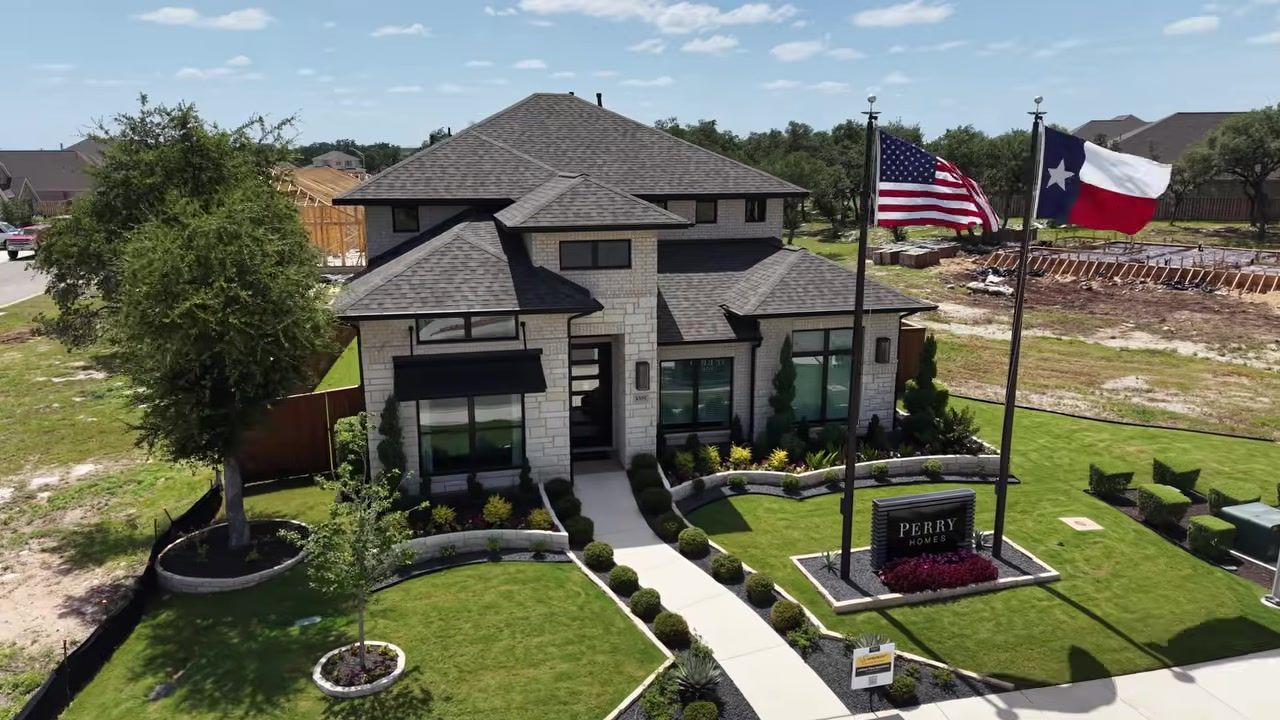
First up is a move-in-ready Perry Home in Parmer Ranch in Georgetown. It's listed just under $500,000 with nearly 2,600 square feet, 4 beds, 3.5 baths. Perry is giving buyers a choice: up to $35,000 FlexCash or a 4.99% conventional rate with a 5.178% APR.
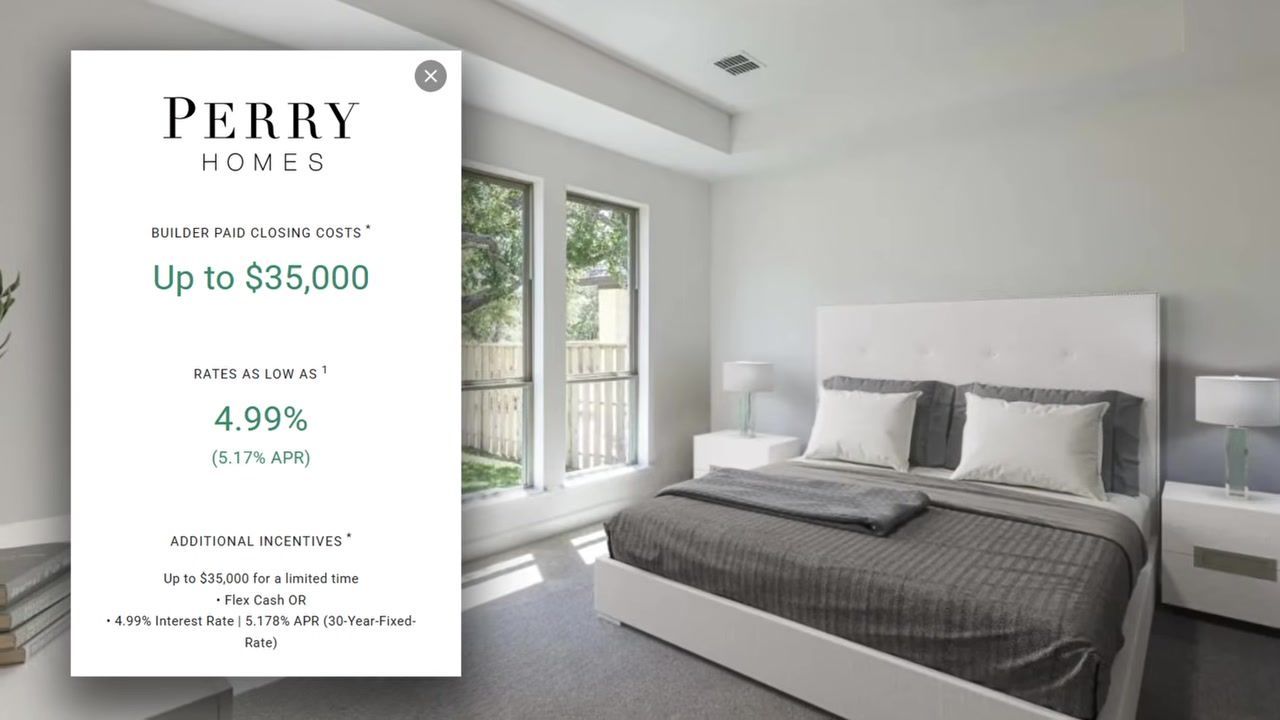
Think of FlexCash as builder money that can be used towards certain approved costs, things like upgrades, closing costs, or buying down the interest rate. But there's an important detail here. Perry says a $5,400 incentive from its preferred lender is already included in that $35,000. It's not $35,000 plus an additional $5,400.
The 4.99% example assumes a 30-year conventional loan, 10% down, and a 780 credit score. On this Parmer Ranch home, 10% down is nearly $50,000, leaving us with a loan of just under $450,000.
The Payment Comparison
So our first calculation uses that nearly $450,000 loan at Perry's advertised 4.99% interest rate. Then I take that exact same loan and plug in 7.12%, the conventional rate that Mortgage News Daily showed us when I pulled the numbers. That 7.12% is a market benchmark, not a guaranteed rate for any individual buyer.
Yes, rates have hit above 7%. I know, it's insane. That's why these builder incentives are so crucial if you want to buy a home or need to buy a home. That's the reason why I'm making this video specifically. Because agents just don't deep dive this stuff. And I want you to know that it is possible to afford a new home, and part of these builder incentives are the reason why people are still able to buy.
At Perry's 4.99% rate, principal and interest on this exact home is around $2,412 a month. That same loan at the 7.12% market rate example? Principal and interest jumps to $3,030 a month. That's a difference of $617 a month. That's like a car payment. Or about $7,400 a year for the first year. And I know a lot of things I could do with $7,400. Save to invest more in rental properties so you can come to Colorado Springs. I'm thinking like going on a nice vacation with your loved ones. With that $7,400, you could do a cruise. You can do a lot of stuff.
And remember, I didn't change the house, down payment, or loan balance. The only thing that changed was the interest rate. That's what a 2.13 percentage point difference does on a loan this size.
Understanding the FlexCash Limits
The phrase to pay close attention to is *up to* $35,000. Up to is doing some work here. The amount available can depend on the type of home, loan, closing date, and how you want to use these incentives. So don't stop at the headline. These builder incentives change all the time. Get the offer in writing, and make sure every dollar is accounted for.
For Perry's conventional loan with 10% down, the builder can generally contribute up to 6% towards certain buyer closing costs and incentives. On the Perry home in Parmer Ranch , that 6% is roughly $30,000. But Perry's headline is up to $35,000. That does not necessarily mean you can take all $35,000 and throw it at closing costs or discount points. The lender has to account for where the money goes, and you need enough eligible expenses to actually use it. And that's where having an agent comes in, because I can help tell you how to use it.
Berry Creek Highlands: 3.99% FHA with Lower Down Payment
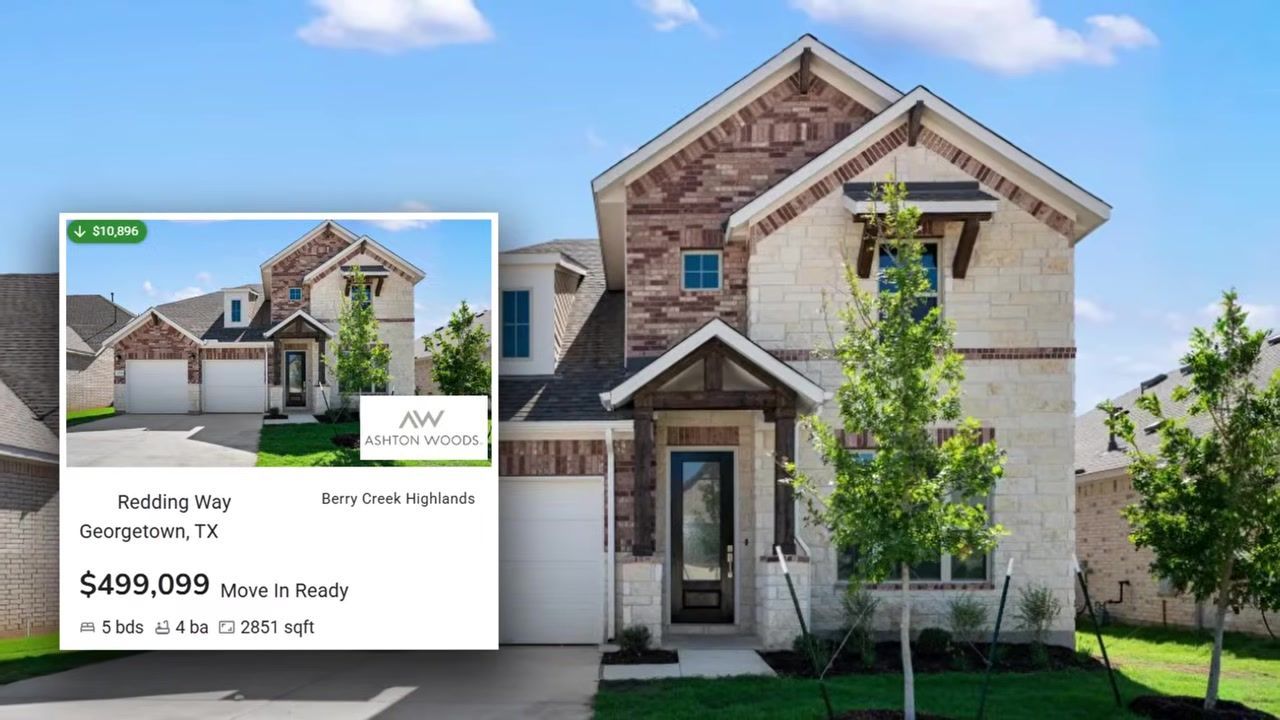
Now let's move to Ashton Woods. This home is in Berry Creek Highlands in Georgetown. It's listed just under $500,000 with nearly 2,900 square feet, 5 bedrooms, and 4 baths. Ashton Woods is advertising a 3.99% fixed FHA rate with a 4.23% APR, plus up to $6,500 towards closing costs.
I'm using the FHA loan option for this comparison. FHA loans are insured by the Federal Housing Administration, and this example allows for a 3.5% down payment for a qualified buyer. Ashton Woods' published example also requires a 620 credit score, and you have to plan to live in the home.
On this house, 3.5% down is about $17,500. That leaves the starting loan amount at about $482,500. But don't forget, an FHA loan also has an upfront mortgage insurance charge of 1.75%. That gets financed into the loan and adds a little over $8,400 more. So the balance I use to calculate the principal and interest becomes just over $490,000.
If you have questions about FHA mortgages versus conventional mortgages, that's something you can talk with the lender about. There's different fees that are included in different loan types, and I have great vendors that I can refer you to just for those questions.
The FHA Payment Breakdown
Just like Perry, I use that exact same balance on both sides of the test. First, Ashton Woods' advertised 3.99% rate. Then I take the exact same loan and plug in 6.68%. Typically the FHA rates are a little bit lower than the conventional rates, not much, but I'm using the same numbers so that I can compare equally. Same house, same down payment, same loan balance, same 30-year term, only the interest rate changes.
This is why you can't just look at 3.99% versus 4.99% and automatically say Ashton Woods has the better deal. The FHA example does start with less money down, a larger loan balance, and a different mortgage insurance structure.
At Ashton Woods' 3.99% builder rate, the monthly mortgage payment just for principal and interest is about $2,337. At the 6.68% FHA market rate example, that same loan jumps to about $3,156 a month. That's $819 more a month without the builder's discounted rate, or over $9,800 over the first year. That's an even better vacation.
So as you can see, that FHA loan, although you're financing more money, it still saves you on the payment, saves you more than the conventional loan. That's how a lower interest rate gives you a much better financial benefit. But I still haven't added monthly FHA mortgage insurance. That cost applies to both sides, so I left this out on this particular comparison to isolate what the interest rate itself is doing.
The 13.225 Points Question
Here's where Ashton Woods gets especially interesting. The builder says it pays 13.225 total points through a limited pool of program funds. If the phrase 13.225 points means absolutely nothing to you, good, because I'm about to explain why that number matters.
And before somebody compares this $2,337 payment to Perry's $2,412 payment and declares a winner, don't. Different loan, different down payment, different mortgage insurance. The fair comparison is each builder's discounted rate against the regular market interest rate for the same loan.
The FHA example for the Ashton Woods home in Berry Creek Highlands also allows up to 6% of the sales price towards certain approved costs, so the same $30,000. But Ashton Woods separately advertises up to $6,500 towards closing costs and says the builder is paying 13.225 total points for a discounted rate. And that should immediately make you ask a question, because 13.225% of a loan around $500,000 is a whole lot more than $30,000. So I would want the lender to explain exactly how the program is structured, what counts towards the normal builder contribution limit, and what may be funded through a separate builder-lender program.
With larger incentives, some money may also be used for things like reducing the price, paying for the lot premium, or covering approved upgrades, which is why a $35,000 incentive by itself doesn't tell you very much. You need to know which bucket every dollar goes into. When you work with me, I ask those questions at the very beginning. Believe me, I ask those questions at the beginning, in the middle, close to the end, in the end, after the end. No stone, 2x4, or shingle goes unturned.
How Builders Buy Down Rates (and What Points Really Cost)
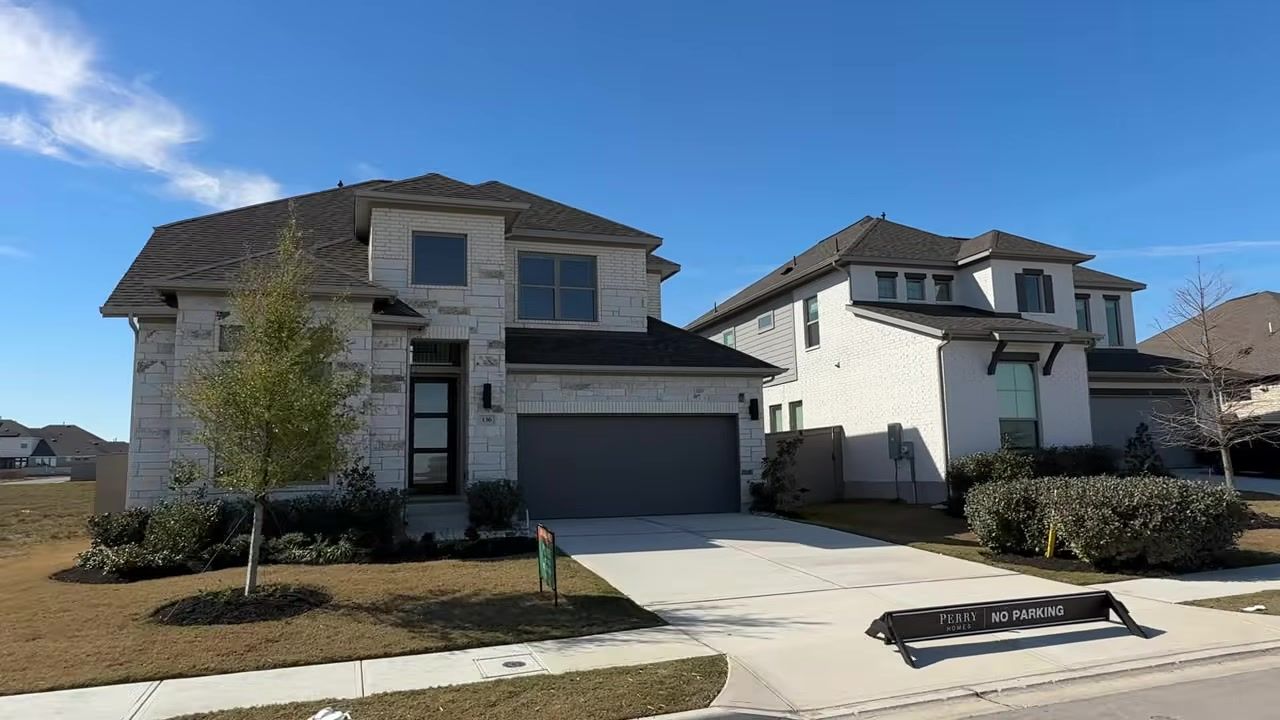
Now let's talk about discount points. The easiest part is the definition. One point equals 1% of the loan amount. So on Perry's $450,000 loan, 1 point costs $4,500, right? Wrong.
Here's where people get tripped up. One point does not mean your interest rate automatically drops by 1 percentage point. There's no simple one-to-one formula. The cost to lower rates changes with the market, the loan, and even how much lower of a rate you want. And as you will probably see, in higher interest rate environments, the more it costs to buy down your interest rate.
On one lender rate sheet that I reviewed for this video, lowering the rate by a full percentage point cost anywhere from $3,659 to $5,044 depending on where you started. On a $450,000 loan, that works out roughly to $17,000 to $23,000 just to reduce the rate by 1 percentage point. That's pricey. But hey, if the builder's paying for it, let's do it.
Generally, the lower you push the rate, the more expensive it gets. And if you're wondering why the cost jumps so much, part of what you're seeing is the lender's pricing and compensation built into the rate.
A Real-World Example
Just as a quick example, I actually have clients who are looking for a home and they found one. It was actually a little over $600,000, but it was going to cost them $35,000 to buy the rate down from like 6.9% down to 4.99%. So it's all over the place when it comes to the cost. My suggestion is do it, buy down the rate, because that's going to save you a ton of money over time.
Perry tells us its 4.99% rate uses purchase points, but the public listing does not tell us exactly what those points cost. Typically builders, when they have a preferred lender, they buy pools of money at lower interest rates to use. And so there's only so many funds in those pools. And once it's gone, it's done. For this particular example, I can't simply say Perry is spending the entire $35,000 to create that 4.99% rate, although it's plausible.
With interest rates jumping all over the place right now, you have to be decisive because if you wait, you say let's see what happens, that could cost you. Especially if you need to purchase something immediately. A lot of my relocation buyers can't wait. One of my clients may have waited a little too long, and it cost them.
Ashton Woods gives us more detail by publishing 13.225 total seller-paid points, but I would still want the lender to confirm exactly how the program is structured. And here's a great example of why the lowest rate isn't automatically the best financial choice. On a separate FHA worksheet I reviewed, dropping the rate from 4.25% to 3.99% lowered principal and interest by only $64 a month, but it increased the cash that you need to close by over $6,000 because the buyer gave up a lender credit to get the lower rate.
So you have to compare more than just the interest rate. Look at the APR, points, lender credits, fees, monthly payment, and how much money you need to bring to close.
What's Missing from the Builder's Payment Number
Up to this point, my charts have isolated what the interest rate does. But principal and interest are only part of your total monthly mortgage payment.
First, add property taxes. Perry's listing shows a 2.45% tax rate, although the actual bill depends on the taxable value of the home you're purchasing and any exemptions that you may qualify for, like the homestead exemption. Then add homeowner's insurance, HOA dues, and any separate district assessments, like a PID, which is a Public Improvement District. Perry's listing, for example, shows a $600 a year HOA fee. That's another $50 a month when you're building your budget.
And because that conventional example only puts 10% down, it may also require private mortgage insurance. Perry's example estimates that to be around $75 a month, and that also can vary depending on your credit score. Sometimes that can even go into $100 or $200 extra per month.
FHA Mortgage Insurance
The FHA loan has mortgage insurance too. I already added that upfront FHA charge to the loan balance, but there's also a monthly FHA mortgage insurance payment. I left that out of the chart earlier because it would be the same on both sides of our rate test, but please don't leave that out of your actual budget.
Your full payment needs to include principal, interest, property taxes, homeowner's insurance, HOA dues, district charges, and any required mortgage insurance. Then you can decide whether that home actually fits your budget.
And I will tell you that the property tax amount is usually the biggest question mark, but you're going to really want to lean on your lender to give you that figure. They're usually pretty close. And on new construction, pay very close attention to the property tax estimate from your lender. If the current tax record is based on an empty lot or a partially built home, that number will be much lower than once the home is complete and fully assessed.
I have personal experience in that because most of my homes are new construction. That's exactly what happened. So I always ask the lender to estimate what the taxes are on a completed home as opposed to the dirt or just the lot. Because next thing you're gonna call your agent be like, what happened with this property tax assessment? What happened to my mortgage payment? Because if you escrow your mortgage payment, it could potentially go up by hundreds, if not $1,000 more every month if you don't calculate that properly.
That's an important conversation to have with your lender. I recommend asking the lender to estimate the property taxes on a completed home. Get the homeowner's insurance quote early too, because that beautiful low mortgage payment can get less beautiful pretty quickly once the rest of the bills show up.
Your Buyer Checklist Before Signing
Here's the test you can use with almost any builder incentive. Ask the lender for two worksheets: one showing the builder's discounted rate and another showing the exact same loan without the rate incentive. Keep the property, loan type, down payment, loan term, and credit assumptions the same. Then compare the interest rate, APR, points, lender credit, fees, mortgage insurance, monthly payment, and total cash needed at closing.
And ask if the advertised rate is fixed for the entire loan or whether it's only temporarily reduced in the first year or two. That's a very important question to get answers to. You'll see a lot of 2-1 buydowns, so you have a lower interest rate the first year, the second year it goes up a little bit, and then the third year and beyond it goes up again. So you'll want to know that. A temporary buydown is a completely different product from the permanent fixed rates I used in today's examples.
Then add the costs that are specific to the actual house that you're considering: property taxes, insurance, HOA dues, and any district assessments. And after the numbers work, then look at everything else that matters: location, commute, amenities, lot size, yard, and the builder itself. The location you choose is more important than the house itself. That's one of my main things.
And remember the rule I started with: compare one loan against itself. Because if you compare two completely different loan programs, you can easily credit the builder's interest rate for savings that actually come from something else.
Which Builder Rate Is Right for You?
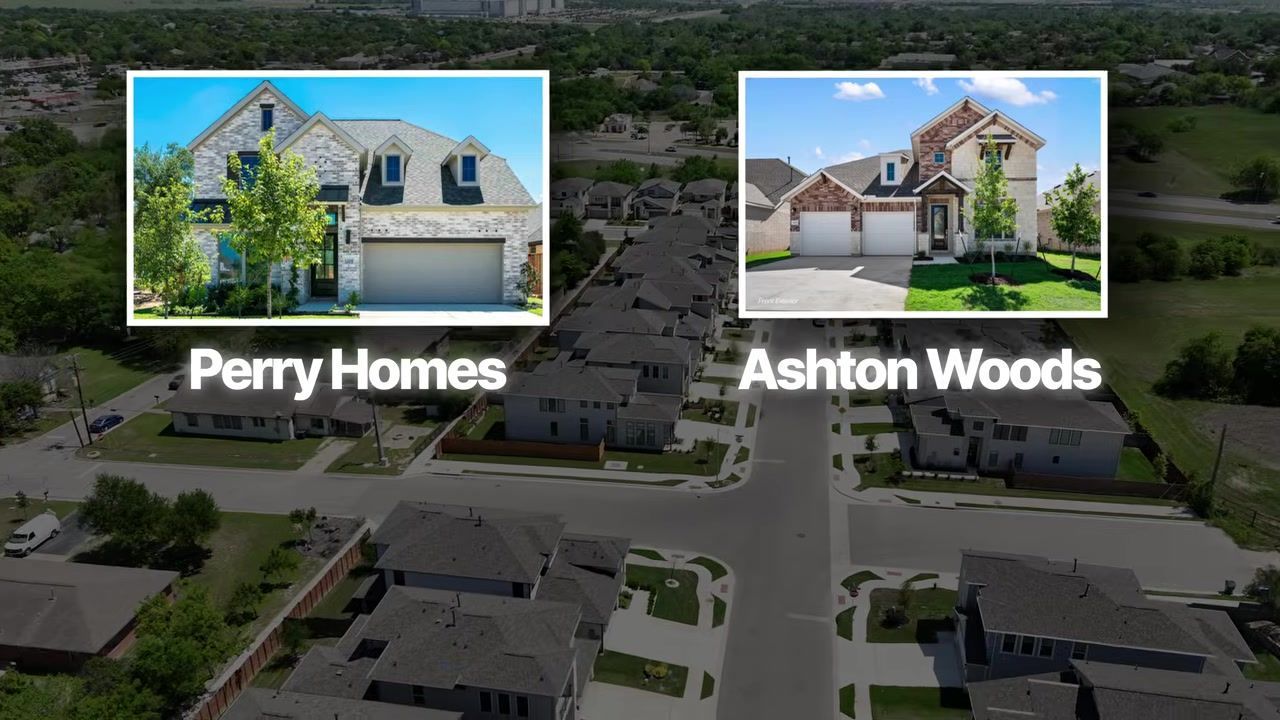
So I know that's a lot of numbers, but it's important. And working with agents who know what they're doing, or lenders or vendors that I use to help you know what you're doing, is very important.
If you're looking at a builder incentive like this and thinking, I have no idea if this is actually a good deal, you don't have to figure it out on your own. I specialize in new construction, and every week I talk to buyers just like you who need help comparing builders, incentives, lenders, and the real numbers behind the offer.
And I put my money where my mouth is because I am literally in Colorado Springs. I sold a new construction property I bought in Mississippi and moved the money with a 1031 exchange to put a down payment on another new construction property here in Colorado Springs, which is my third. So when I say I'm a new construction specialist, that's exactly what I am. I buy it personally, I buy investment properties with it, and I am the agent for you when you're looking for new construction.
Conclusion
Whether you're moving in 10 days or 10 months, reach out to me before you start visiting any builder so I can help you put the right strategy in place. I'll help you sort through the incentives, compare the numbers, and make sure you're not leaving any money on the table because I like you. And that's kind of the point. That's exactly the point. That's why I make these videos, because I want you to be the first to know.
You can call, text, or email me, or book a call through my website or the QR code on the screen. I cover the new construction market across the Austin suburbs every week, including Georgetown, Hutto, and my hometown, Manor, Texas. Let's talk through your options and make sure you understand exactly what you're getting before you sign.
FAQ
How much does it cost to buy down an interest rate on a new construction home?
On a $450,000 loan, lowering the rate by a full percentage point can cost anywhere from $17,000 to $23,000 depending on where you start and how much lower you want to go. In higher interest rate environments, the cost to buy down rates gets more expensive. The builder may cover this cost through their incentive pool, but you need to confirm exactly how the program is structured and whether the funds are limited.
Can I use builder FlexCash for anything I want?
Not exactly. FlexCash can be used towards certain approved costs like upgrades, closing costs, or buying down the interest rate, but the lender has to account for where the money goes. You need enough eligible expenses to actually use it. For example, Perry's conventional loan with 10% down allows the builder to contribute up to 6% towards certain buyer closing costs and incentives, which is roughly $30,000 on a $500,000 home.
Is a 3.99% FHA rate better than a 4.99% conventional rate?
You can't compare them directly because the loan programs, down payments, and mortgage insurance structures are different. The FHA example requires less money down (3.5% vs 10%) but includes upfront and monthly FHA mortgage insurance. The conventional example requires a larger down payment but may have lower monthly mortgage insurance. Compare each builder's discounted rate against the regular market rate for the same loan to see the true savings.
What happens to my property taxes after I close on a new construction home?
If the current tax record is based on an empty lot or a partially built home, your property tax bill will be much lower than once the home is complete and fully assessed. This can increase your escrowed mortgage payment by hundreds or even $1,000 more every month if you don't calculate it properly. Ask your lender to estimate the property taxes on a completed home, not just the dirt or the lot.
Are builder rate buydowns temporary or permanent?
It depends on the program. Some builders offer temporary buydowns like a 2-1 buydown, where you have a lower interest rate the first year, the second year it goes up a little bit, and then the third year and beyond it goes up again. The examples I used in this video are permanent fixed rates for the entire 30-year term. Always ask the lender if the advertised rate is fixed for the entire loan or only temporarily reduced.
Do builder incentive pools run out?
Yes. Builders buy pools of money at lower interest rates to use, and there's only so many funds in those pools. Once it's gone, it's done. With interest rates jumping all over the place right now, you have to be decisive because if you wait to see what happens, that could cost you. This is especially true for relocation buyers who can't afford to wait.

Alisha & Matthew Wilson
With years of experience in both residential and investment properties, they are dedicated to helping clients navigate Austin’s thriving market.

LIVING IN Austin TX
Specializing in relocation, they provide expert advice and guidance to help you find your dream home in the vibrant Austin metro market. Tune in for helpful tips, neighborhood tours, and insights on living in the Austin suburbs.